2001: A Space Odyssey
"What? Only three interview requests overnight? Has the world forgotten
me already?" was the e-mail response from Sir Arthur to a New York
Times interview request the first week of 2001. Obviously, he has been
very busy in the beginning of a year forever linked to his name. In 1968,
Stanley Kubrick finished a science fiction epic film after nealy three
years of production based on a short story by then just plain Arthur C.
Clarke (The
Sentinel, 1948). The rest was history, as they say...
Arthur C. Clarke was born in Minehead,Somerset on December 16, 1917 and
was an avid collector of pulp fiction magazines. He pursued a Bachelor
of Science degree in physics, and pure and applied mathematics at King's
College, London. Clarke became chairman of the British Interplanetary
Sociey and recruited George Bernard Shaw as well as many other new members
in the mid 1940s. He met C.S.Lewis and J.R.R. Tolkein at Oxford. Clarke
published his first novel Prelude
to Space in 1947. He was awarded a CBE in 1989 and was knighted
in 1998. Today, Sir Arthur lives in Sri Lanka and continues to amaze everyone
with his unique foresight and creative thought.
website: Arthur
C. Clarke Foundation
Arthur C. Clarke
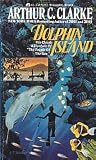 Dolphin Island -Arthur C. Clarke - After his spacecraft crashes into the Pacific, Johnny Clinton is taken to a mysterious research laboratory by a band of helpful dolphins Dolphin Island -Arthur C. Clarke - After his spacecraft crashes into the Pacific, Johnny Clinton is taken to a mysterious research laboratory by a band of helpful dolphinsList Price:$2.95
Our Price:
|
 The Invisible Man: A Grotesque Romance (Campfire Graphic Novels) -H. G. Wells - - Used Book in Good Condition 'The stranger came early in February, one wintry day, through a biting wind and a driving snow.' The Invisible Man: A Grotesque Romance (Campfire Graphic Novels) -H. G. Wells - - Used Book in Good Condition 'The stranger came early in February, one wintry day, through a biting wind and a driving snow.'
When the residents of Iping first see him, he is wearing an overcoat and goggles, and is covered from head to toe with bandages. His hidden identity and mysterious behavior causes the locals to start asking questions. At first they assume he must have been involved in some kind of horrific accident. But the truth is far more alarming than that.
As the reality of the situation starts to become clear, only one thing is certain; the stranger is a troubled soul and can only deal with his personal fear by terrorizing the people around him.
First published in 1897, The Invisible Man is HG Wells's warning to the world about the dangers of science without humanity.List Price:$9.99
Our Price:$9.99
|
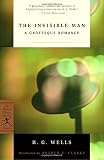 The Invisible Man: A Grotesque Romance (Modern Library Classics) -H. G. Wells - A gripping and entertaining tale of terror and suspense as well as a potent Faustian allegory of hubris and science run amok, The Invisible Man endures as one of the signature stories in the literature of science fiction. A brilliant scientist uncovers the secret to invisibility, but his grandiose dreams and the power he unleashes cause him to spiral into intrigue, madness, and murder. The inspiration for countless imitations and film adaptations, The Invisible Man is as remarkable and relevant today as it was a hundred years ago. As Arthur C. Clarke points out in his Introduction, “The interest of the story . . . lies not in its scientific concepts, but in the brilliantly worked out development of the theme of invisibility. If one could be invisible, then what?” The Invisible Man: A Grotesque Romance (Modern Library Classics) -H. G. Wells - A gripping and entertaining tale of terror and suspense as well as a potent Faustian allegory of hubris and science run amok, The Invisible Man endures as one of the signature stories in the literature of science fiction. A brilliant scientist uncovers the secret to invisibility, but his grandiose dreams and the power he unleashes cause him to spiral into intrigue, madness, and murder. The inspiration for countless imitations and film adaptations, The Invisible Man is as remarkable and relevant today as it was a hundred years ago. As Arthur C. Clarke points out in his Introduction, “The interest of the story . . . lies not in its scientific concepts, but in the brilliantly worked out development of the theme of invisibility. If one could be invisible, then what?”List Price:$8.00
Our Price:$6.65
|
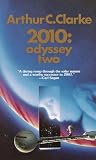 2010: Odyssey Two (Turtleback School & Library Binding Edition) -Arthur C. Clarke - FOR USE IN SCHOOLS AND LIBRARIES ONLY. Haywood Floyd, director of the original Discovery mission, sets out to discover what happened to HAL 9000 and comes face to face with something claiming to be Dave Bowman. 2010: Odyssey Two (Turtleback School & Library Binding Edition) -Arthur C. Clarke - FOR USE IN SCHOOLS AND LIBRARIES ONLY. Haywood Floyd, director of the original Discovery mission, sets out to discover what happened to HAL 9000 and comes face to face with something claiming to be Dave Bowman.List Price:$18.40
Our Price:
|
Software
 -Arthur C. Clarke - -Arthur C. Clarke - List Price:
Our Price:
|
2001: A Space Odyssey
More Stuff!
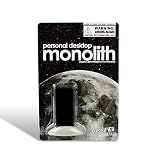 Toynk Science Fiction Collectible 2001 A Space Odyssey Monolith Action Figure -Arthur C. Clarke - - GREAT DESIGN. The design features an awesome monolith action figure from the classic sci-fi film 2001: A Space Odyssey. - COLLECTORS ITEM. The monolith action figure measures approximately 0.75 x 3 x 0.675 inches. - QUALITY MATERIAL. The Monolith costume figure is made up of semi-synthetic, amorphous and solid plastic materials. - ATTRACTIVE PACKAGING. It comes packaged on a themed cardboard backer collector card. - PERFECT GIFT. This exclusive figure is sure to make a great gift for any 2001: A Space Odyssey movie fan. Toynk Science Fiction Collectible 2001 A Space Odyssey Monolith Action Figure -Arthur C. Clarke - - GREAT DESIGN. The design features an awesome monolith action figure from the classic sci-fi film 2001: A Space Odyssey. - COLLECTORS ITEM. The monolith action figure measures approximately 0.75 x 3 x 0.675 inches. - QUALITY MATERIAL. The Monolith costume figure is made up of semi-synthetic, amorphous and solid plastic materials. - ATTRACTIVE PACKAGING. It comes packaged on a themed cardboard backer collector card. - PERFECT GIFT. This exclusive figure is sure to make a great gift for any 2001: A Space Odyssey movie fan. List Price:$23.99
Our Price:$19.99
|
 Moebius Models 1/8 2001 Space Odyssey EVA Pod, MOE20014 -Arthur C. Clarke - - Measures approx 10" tall - As seen in Stanley Kubrick's science fiction masterpiece, 2001: A Space Odyssey -Highly detailed styrene model is based on meticulous research - Precision-tooled styrene with superior fit and crisp accurate detailing -Completed kit is 10" tall - -1/8 scale -Skill level 3, ages 15 and up - Features detailed interior, marking decals and comprehensive instructions Moebius Models 1/8 2001 Space Odyssey EVA Pod, MOE20014 -Arthur C. Clarke - - Measures approx 10" tall - As seen in Stanley Kubrick's science fiction masterpiece, 2001: A Space Odyssey -Highly detailed styrene model is based on meticulous research - Precision-tooled styrene with superior fit and crisp accurate detailing -Completed kit is 10" tall - -1/8 scale -Skill level 3, ages 15 and up - Features detailed interior, marking decals and comprehensive instructions List Price:
Our Price:$181.23
|
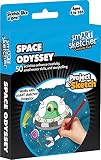 smART sketcher - SD Pack - Space Odyssey -Arthur C. Clarke - - Pop the space odyssey SD card into a smART Sketcher projector and access step-by-step instructions for drawing 50 different intergalactic activities - Space odyssey activity pack - Compliments STEM learning - Compliments steam learning - Enhances creativity, small motor skills, and storytelling smART sketcher - SD Pack - Space Odyssey -Arthur C. Clarke - - Pop the space odyssey SD card into a smART Sketcher projector and access step-by-step instructions for drawing 50 different intergalactic activities - Space odyssey activity pack - Compliments STEM learning - Compliments steam learning - Enhances creativity, small motor skills, and storytelling List Price:$12.99
Our Price:$11.60
|
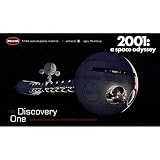 2001-3 1/144 2001 Discovery -Arthur C. Clarke - - Over 41" long! - Aluminum tube spine insert for stability 2001-3 1/144 2001 Discovery -Arthur C. Clarke - - Over 41" long! - Aluminum tube spine insert for stability List Price:
Our Price:$143.86
|
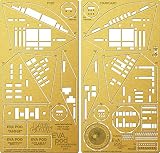 2001: A Space Odyssey - EVA Pod Photoetch Set - PGX220 -Arthur C. Clarke - - Includes toggle switches, name placards for Discovery's three EVA pods, as well as alternate pieces for the two forward circular control panels, the communications switch panel. - Each button and display screen is perfectly duplicated in opaque photoetched brass - Decaling the interior of Moebius Models' new EVA Pod a breeze with this new photoetch set. 2001: A Space Odyssey - EVA Pod Photoetch Set - PGX220 -Arthur C. Clarke - - Includes toggle switches, name placards for Discovery's three EVA pods, as well as alternate pieces for the two forward circular control panels, the communications switch panel. - Each button and display screen is perfectly duplicated in opaque photoetched brass - Decaling the interior of Moebius Models' new EVA Pod a breeze with this new photoetch set. List Price:
Our Price:$79.95
|
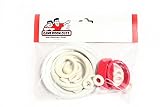 Game Room Guys Williams Space Odyssey Pinball Rubber Ring Kit -Arthur C. Clarke - - Post caps not included - Custom built for this specific pinball - Includes rubber rings, flipper rubbers, ball shooter tip, etc. - Your kit will include all necessary parts for full rubber replacement - High Quality Product Game Room Guys Williams Space Odyssey Pinball Rubber Ring Kit -Arthur C. Clarke - - Post caps not included - Custom built for this specific pinball - Includes rubber rings, flipper rubbers, ball shooter tip, etc. - Your kit will include all necessary parts for full rubber replacement - High Quality Product List Price:$29.99
Our Price:$29.99
|
|

 amazon.com
 amazon.uk
 amazon.ca
 amazon.fr
 amazon.de
 amazon.jp
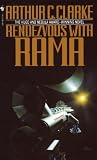 Rendezvous With Rama (Turtleback School & Library Binding Edition)
 Childhood's End (Turtleback School & Library Binding Edition)
 2001: A Space Odyssey (Turtleback School & Library Binding Edition)
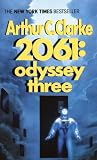 2061: Odyssey Three (Turtleback School & Library Binding Edition)
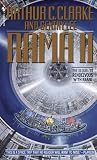 Book 2, Rama II
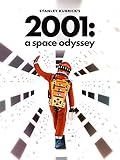 2001: A Space Odyssey
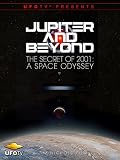 Jupiter and Beyond - The Secret of 2001: A Space Odyssey
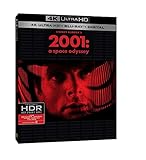 2001: A SPACE ODYSSEY (4K UHDBD) [Blu-ray]
 Some of the Things Molecules Do
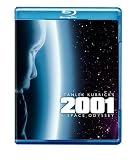 2001: A Space Odyssey [Blu-ray] by Warner Home Video
 Cyberchase: Space Waste Odyssey
 2088: A Space Odyssey
 Stanley Kubrick Triple Feature (2001: A Space Odyssey / A Clockwork Orange / The Shining) [Blu-ray]
 2001: A Space Odyssey/Clockwork Orange (2-Pack)
 4 Film Favorites: Stanley Kubrick (The Shining: Special Edition, 2001: A Space Odyssey: Special Edition, Barry Lyndon, Eyes Wide Shut: Special Edition)
 Asmodee Space Gate Odyssey Sci-Fi Board Game Standard
 MAFEX SPACE SUIT YELLOW Ver. 『2001: a sapce odyssey』Non-scale ABS & ATBC-PVC painted action figure
 Itty Bittys Limited Edition 2001: a space odyssey DAVE
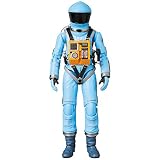 MAFEX mafex No.090 2001 space journey space suit light blue version height 160 mm pre-painted PVC figure