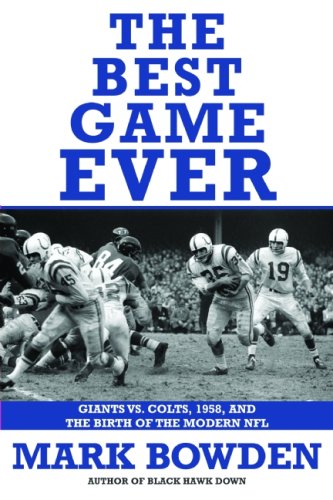
 The Best Game Ever: Giants vs. Colts, 1958, and the Birth of the Modern NFL by Mark Bowden
-
The Best Game Ever: Giants vs. Colts, 1958, and the Birth of the Modern NFL by Mark Bowden
- On December 28, 1958, the New York Giants and Baltimore Colts met under the lights of Yankee Stadium for the NFL Championship game. Played in front of sixty-four thousand fans and millions of television viewers around the country, the game would be remembered as the greatest in football history. On the field and roaming the sidelines were seventeen future Hall of Famers, including Colts stars Johnny Unitas, Raymond Berry, and Gino Marchetti, and Giants greats Frank Gifford, Sam Huff, and assistant coaches Vince Lombardi and Tom Landry. An estimated forty-five million viewers—at that time the largest crowd to have ever watched a football game—tuned in to see what would become the first sudden-death contest in NFL history. It was a battle of the league's best offense—the Colts—versus its best defense—the Giants. And it was a contest between the blue-collar Baltimore team versus the glamour boys of the Giants squad. The Best Game Ever is a brilliant portrait of how a single game changed the history of American sport. Published to coincide with the fiftieth anniversary of the championship, it is destined to be a sports classic.
List Price: $23.00
Our Price: $4.40
More Info! |
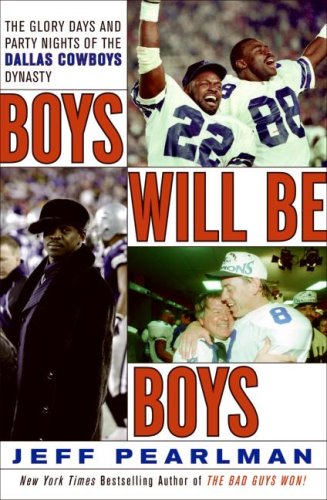 Boys Will Be Boys: The Glory Days and Party Nights of the Dallas Cowboys Dynasty by Jeff Pearlman
-
Boys Will Be Boys: The Glory Days and Party Nights of the Dallas Cowboys Dynasty by Jeff Pearlman
- They were America's Team—the high-priced, high-glamour, high-flying Dallas Cowboys of the 1990s, who won three Super Bowls and made as many headlines off the field as on it. Led by Emmitt Smith, the charismatic Deion "Prime Time" Sanders, and Hall of Famers Troy Aikman and Michael Irvin, the Cowboys rank among the greatest of all NFL dynasties. In similar fashion to his New York Times bestseller The Bad Guys Won!, about the 1986 New York Mets, in Boys Will Be Boys, award-winning writer Jeff Pearlman chronicles the outrageous antics and dazzling talent of a team fueled by ego, sex, drugs—and unrivaled greatness. Rising from the ashes of a 115 season in 1989 to capture three Super Bowl trophies in four years, the Dallas Cowboys were guided by a swashbuckling, skirt-chasing, power-hungry owner, Jerry Jones, and his two eccentric, hard-living coaches, Jimmy Johnson and Barry Switzer. Together the three built a juggernaut that America loved and loathed. But for a team that was so dominant on Sundays, the Cowboys were often a dysfunctional circus the rest of the week. Irvin, nicknamed "The Playmaker," battled dual addictions to drugs and women. Charles Haley, the defensive colossus, presided over the team's infamous "White House," where the parties lasted late into the night and a steady stream of long-legged groupies came and went. And then there were Smith and Sanders, whose Texas-sized egos were eclipsed only by their record-breaking on-field perfomances. With an unforgettable cast of characters and a narrative as hard-hitting and fast-paced as the team itself, Boys Will Be Boys immortalizes the most beloved—and despised—dynasty in NFL history.
List Price: $25.95
Our Price: $13.96
More Info! |
 Born to Run: A Hidden Tribe, Superathletes, and the Greatest Race the World Has Never Seen by Christopher McDougall
- Full of incredible characters, amazing athletic achievements, cutting-edge science, and, most of all, pure inspiration, Born to Run is an epic adventure that began with one simple question: Why does my foot hurt? In search of an answer, Christopher McDougall sets off to find a tribe of the world’s greatest distance runners and learn their secrets, and in the process shows us that everything we thought we knew about running is wrong.
Born to Run: A Hidden Tribe, Superathletes, and the Greatest Race the World Has Never Seen by Christopher McDougall
- Full of incredible characters, amazing athletic achievements, cutting-edge science, and, most of all, pure inspiration, Born to Run is an epic adventure that began with one simple question: Why does my foot hurt? In search of an answer, Christopher McDougall sets off to find a tribe of the world’s greatest distance runners and learn their secrets, and in the process shows us that everything we thought we knew about running is wrong.
Isolated by the most savage terrain in North America, the reclusive Tarahumara Indians of Mexico’s deadly Copper Canyons are custodians of a lost art. For centuries they have practiced techniques that allow them to run hundreds of miles without rest and chase down anything from a deer to an Olympic marathoner while enjoying every mile of it. Their superhuman talent is matched by uncanny health and serenity, leaving the Tarahumara immune to the diseases and strife that plague modern existence. With the help of Caballo Blanco, a mysterious loner who lives among the tribe, the author was able not only to uncover the secrets of the Tarahumara but also to find his own inner ultra-athlete, as he trained for the challenge of a lifetime: a fifty-mile race through the heart of Tarahumara country pitting the tribe against an odd band of Americans, including a star ultramarathoner, a beautiful young surfer, and a barefoot wonder.
With a sharp wit and wild exuberance, McDougall takes us from the high-tech science labs at Harvard to the sun-baked valleys and freezing peaks across North America, where ever-growing numbers of ultrarunners are pushing their bodies to the limit, and, finally, to the climactic race in the Copper Canyons. Born to Run is that rare book that will not only engage your mind but inspire your body when you realize that the secret to happiness is right at your feet, and that you, indeed all of us, were born to run.
From the Hardcover edition.Book Description
Full of incredible characters, amazing athletic achievements, cutting-edge science, and, most of all, pure inspiration, Born to Run is an epic adventure that began with one simple question: Why does my foot hurt? In search of an answer, Christopher McDougall sets off to find a tribe of the world’s greatest distance runners and learn their secrets, and in the process shows us that everything we thought we knew about running is wrong.
Isolated by the most savage terrain in North America, the reclusive Tarahumara Indians of Mexico’s deadly Copper Canyons are custodians of a lost art. For centuries they have practiced techniques that allow them to run hundreds of miles without rest and chase down anything from a deer to an Olympic marathoner while enjoying every mile of it. Their superhuman talent is matched by uncanny health and serenity, leaving the Tarahumara immune to the diseases and strife that plague modern existence. With the help of Caballo Blanco, a mysterious loner who lives among the tribe, the author was able not only to uncover the secrets of the Tarahumara but also to find his own inner ultra-athlete, as he trained for the challenge of a lifetime: a fifty-mile race through the heart of Tarahumara country pitting the tribe against an odd band of Americans, including a star ultramarathoner, a beautiful young surfer, and a barefoot wonder. With a sharp wit and wild exuberance, McDougall takes us from the high-tech science labs at Harvard to the sun-baked valleys and freezing peaks across North America, where ever-growing numbers of ultrarunners are pushing their bodies to the limit, and, finally, to the climactic race in the Copper Canyons. Born to Run is that rare book that will not only engage your mind but inspire your body when you realize that the secret to happiness is right at your feet, and that you, indeed all of us, were born to run.
Amazon Exclusive: A Q&A with Christopher McDougall
List Price: $24.95
Our Price: $14.94
More Info! |
 The China Study: The Most Comprehensive Study of Nutrition Ever Conducted and the Startling Implications for Diet, Weight Loss and Long Term Health by T. Colin Campbell
-
The China Study: The Most Comprehensive Study of Nutrition Ever Conducted and the Startling Implications for Diet, Weight Loss and Long Term Health by T. Colin Campbell
- The China Study offers conclusive evidence that a change of diet can dramatically reduce the risks of heart disease, diabetes, and obesity. The book is based on the most comprehensive study of nutrition ever conducted, a 20-year joint project between Cornell University, Oxford University, and the Chinese Academy of Preventive Medicine. The study surveyed the eating habits of 6,500 adults from all over China and Taiwan and found a direct correlation between diet and disease. Author T. Colin Campbell, the study’s project director, provides an intelligent, well-documented analysis of the study’s results, an analysis that explodes the most common American dietary myths. In addressing the dietary sources of the most common diseases, including cancer, Campbell unleashes a no-holds-barred attack on the commercial interests that profit by selling the American public unhealthy food. He also shows how readers can use the study’s results to change their diets and improve their health.
List Price: $24.95
Our Price: $14.96
More Info! |
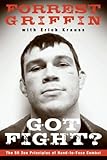 Got Fight?: The 50 Zen Principles of Hand-to-Face Combat by Forrest Griffin, Erich Krauss
-
Got Fight?: The 50 Zen Principles of Hand-to-Face Combat by Forrest Griffin, Erich Krauss
- Wondering why you should purchase this book when there are other titles on the shelves written by much higher-caliber fighters? Well, Forrest Griffin is not as good-looking as those guys. He's not as smart as them. He's also not as athletically endowed. And let's face it, neither are you. Those other fighters are pretty much better than you in every way. But you can actually aspire to be as good as Forrest one day. Why? Because he is nothing special, just like you. Forrest is not a martial artist. He's a fighter, and this book was written for his kin. If you're a hillbilly like Forrest and you get off on having your face rearranged, Got Fight? is for you. This is a manifesto more strategic than Sun Tzu's The Art of War, more philosophical than Bruce Lee's Tao of Jeet Kune Do, more powerful than a well-lubricated locomotive. In these pages you will learn about true mental toughness—whether it's scraping it out in the Octagon or picking up chicks. You will learn about the mental defects that made Forrest Griffin into the abomination he is today and how you can use your shortcomings to become equally horrible. You will learn the essential tactics of hand-to-hand combat as well as how to defend yourself in the event of a sword attack. Never been attacked by a sword? You need this book worse that we thought. Still not convinced? Don't worry. Even if you find that the book sucks, it will be no worse than having sex with Forrest Griffin. You'll feel a small prick and some minor discomfort, and then it will all be over.
List Price: $23.99
Our Price: $14.52
More Info! |
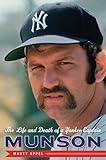 Munson: The Life and Death of a Yankee Captain by Marty Appel
-
Munson: The Life and Death of a Yankee Captain by Marty Appel
- Our captain and leader has not left us, today, tomorrow, this year, next … Our endeavors will reflect our love and admiration for him.”
—Honorary plaque to Munson in Yankee Stadium
Thurman Munson is remembered by fans as the fiercely competitive, tough, and—most of all—inspiring Yankee captain and champion from the wild Bronx Zoo years. He is also remembered for his tragic death, at age thirty-two, when the private plane he was piloting crashed in Canton, Ohio, on August 2, 1979.
Munson is the intimate biography of a complex and larger-than-life legend. Written by former Yankees public relations director Marty Appel, who worked closely with Thurman throughout his career, Munson captures the little-known details of the young man from Canton and his meteoric rise to stardom in baseball’s most storied franchise. Appel examines the tumultuous childhood that led Thurman to work feverishly to escape Canton—and also the marriage and cultural roots that continually drew him back.
Appel also opens a fascinating door on the famed Yankees of the 1970s, recounting moments and stories that have never been told before. From the clubhouse and the dugout to the front office and the owner’s box, this thoughtful baseball biography delves into the affectionately gruff captain’s relationships with friends, fans, and teammates such as Lou Piniella, Bobby Murcer, Graig Nettles, and Reggie Jackson, as well as his colorful dealings with manager Billy Martin and his surprisingly close bond with owner George Steinbrenner. Munson paints a revealing portrait of a private Yankee superstar, as well as a nostalgic and revelatory look at the culture—and amazing highs and lows—of the 1970s New York Yankees teams. More than a biography, Munson is the definitive account of a champion who has not been forgotten and of the era he helped define—written with the intimate detail available only to a true insider.
www.doubleday.com Amazon Best of the Month, July 2009: For Yankee fans, catcher Thurman Munson remains a sentimental standout among the storied lineup of George Steinbrenner’s late '70s Bronx Zoo dynasty of Yankee baseball, when the team made it to three consecutive World Series, winning in '77 and '78. Former Yankee Public Relations Director Marty Appel was the ghostwriter on Munson's autobiography, and now, three decades later, returns to his legendary subject in the biography, Munson: The Life and Death of a Yankee Captain. As a Yankee insider, Appel keeps Munson, "the heart and soul of a world championship team," in a mostly positive light, though he does reveal more sensational elements of Munson's troubled childhood in Canton, Ohio, where his emotionally abusive father criticized him right up to the end of his short life, even chewing out the casket at Munson's funeral. Appel documents Munson's career as a scholarship athlete at Kent State, his time in the Cape Cod league, and his quick ascension to the major leagues and the Yankees, where he won Rookie of the Year in 1970 and was eventually made team captain, the first player to hold the title since Lou Gehrig. His blue-collar work ethic and gruff but lovable demeanor made him an instant fan favorite (a shot of him making a tag at home plate was the first action photo used in a Topps baseball card). And during that Bronx Zoo era, gloriously depicted in Ladies and Gentlemen, The Bronx Is Burning, it was the down-to-earth Munson who balanced out (and butted heads with) his flashy teammate Reggie Jackson. After Jackson made his infamous "I'm the straw that stirs the drink" comments in a Sport magazine interview, Munson was asked if Jackson was quoted out of context. Munson's reply: "For three pages?" Munson was only 32 when he was killed after the plane he was piloting crashed in Canton, Ohio, on August 2, 1979. Despite so many bitter memories of Ohio, it's where he ended up marrying and starting a family, and part of the reason he learned how to fly was to be able to increase visits to his family from New York. Even though he was a relatively inexperienced pilot, he quickly worked his way up from a two-piston engine to a jet. And pilot error was eventually cited as the reason for the crash, which occurred while practicing touch-and-go-landings. At the home-opener the day after his death, when No. 15 was retired, there was a ten-minute standing ovation in memory of the Yankee catcher. Munson was never inducted into the Baseball Hall of Fame, but Marty Appel's biography remains a fitting tribute. --Brad Thomas Parsons
Amazon Exclusive: Marty Appel on Why Munson Matters
List Price: $26.00
Our Price: $14.75
More Info! |
 Tuesdays with Morrie: An Old Man, A Young Man and Life's Greatest Lesson by Mitch Albom
- Maybe it was a grandparent, or a teacher, or a colleague. Someone older, patient and wise, who understood you when you were young and searching, helped you see the world as a more profound place, gave you sound advice to help you make your way through it.
Tuesdays with Morrie: An Old Man, A Young Man and Life's Greatest Lesson by Mitch Albom
- Maybe it was a grandparent, or a teacher, or a colleague. Someone older, patient and wise, who understood you when you were young and searching, helped you see the world as a more profound place, gave you sound advice to help you make your way through it.For Mitch Albom, that person was Morrie Schwartz, his college professor from nearly twenty years ago. Maybe, like Mitch, you lost track of this mentor as you made your way, and the insights faded, and the world seemed colder. Wouldn't you like to see that person again, ask the bigger questions that still haunt you, receive wisdom for your busy life today the way you once did when you were younger? Mitch Albom had that second chance. He rediscovered Morrie in the last months of the older man's life. Knowing he was dying, Morrie visited with Mitch in his study every Tuesday, just as they used to back in college. Their rekindled relationship turned into one final "class": lessons in how to live. Tuesdays with Morrie is a magical chronicle of their time together, through which Mitch shares Morrie's lasting gift with the world.This true story about the love between a spiritual mentor and his pupil has soared to the bestseller list for many reasons. For starters: it reminds us of the affection and gratitude that many of us still feel for the significant mentors of our past. It also plays out a fantasy many of us have entertained: what would it be like to look those people up again, tell them how much they meant to us, maybe even resume the mentorship? Plus, we meet Morrie Schwartz--a one of a kind professor, whom the author describes as looking like a cross between a biblical prophet and Christmas elf. And finally we are privy to intimate moments of Morrie's final days as he lies dying from a terminal illness. Even on his deathbed, this twinkling-eyed mensch manages to teach us all about living robustly and fully. Kudos to author and acclaimed sports columnist Mitch Albom for telling this universally touching story with such grace and humility. --Gail Hudson
List Price: $21.00
Our Price: $9.46
More Info! |
 Cold: Adventures in the World's Frozen Places by Bill Streever
- From avalanches to glaciers, from seals to snowflakes, and from Shackleton's expedition to "The Year Without Summer," Bill Streever journeys through history, myth, geography, and ecology in a year-long search for cold--real, icy, 40-below cold. In July he finds it while taking a dip in a 35-degree Arctic swimming hole; in September while excavating our planet's ancient and not so ancient ice ages; and in October while exploring hibernation habits in animals, from humans to wood frogs to bears.
Cold: Adventures in the World's Frozen Places by Bill Streever
- From avalanches to glaciers, from seals to snowflakes, and from Shackleton's expedition to "The Year Without Summer," Bill Streever journeys through history, myth, geography, and ecology in a year-long search for cold--real, icy, 40-below cold. In July he finds it while taking a dip in a 35-degree Arctic swimming hole; in September while excavating our planet's ancient and not so ancient ice ages; and in October while exploring hibernation habits in animals, from humans to wood frogs to bears.
A scientist whose passion for cold runs red hot, Streever is a wondrous guide: he conjures woolly mammoth carcasses and the ice-age Clovis tribe from melting glaciers, and he evokes blizzards so wild readers may freeze--limb by vicarious limb.
List Price: $24.99
Our Price: $12.47
More Info! |
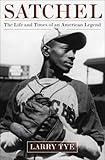 Satchel: The Life and Times of an American Legend by Larry Tye
- He is that rare American icon who has never been captured in a biography worthy of him. Now, at last, here is the superbly researched, spellbindingly told story of athlete, showman, philosopher, and boundary breaker Leroy “Satchel” Paige.
Satchel: The Life and Times of an American Legend by Larry Tye
- He is that rare American icon who has never been captured in a biography worthy of him. Now, at last, here is the superbly researched, spellbindingly told story of athlete, showman, philosopher, and boundary breaker Leroy “Satchel” Paige.
Few reliable records or news reports survive about players in the Negro Leagues. Through dogged detective work, award-winning author and journalist Larry Tye has tracked down the truth about this majestic and enigmatic pitcher, interviewing more than two hundred Negro Leaguers and Major Leaguers, talking to family and friends who had never told their stories before, and retracing Paige’s steps across the continent. Here is the stirring account of the child born to an Alabama washerwoman with twelve young mouths to feed, the boy who earned the nickname “Satchel” from his enterprising work as a railroad porter, the young man who took up baseball on the streets and in reform school, inventing his trademark hesitation pitch while throwing bricks at rival gang members.
Tye shows Paige barnstorming across America and growing into the superstar hurler of the Negro Leagues, a marvel who set records so eye-popping they seemed like misprints, spent as much money as he made, and left tickets for “Mrs. Paige” that were picked up by a different woman at each game. In unprecedented detail, Tye reveals how Paige, hurt and angry when Jackie Robinson beat him to the Majors, emerged at the age of forty-two to help propel the Cleveland Indians to the World Series. He threw his last pitch from a big-league mound at an improbable fifty-nine. (“Age is a case of mind over matter,” he said. “If you don’t mind, it don’t matter.”)
More than a fascinating account of a baseball odyssey, Satchel rewrites our history of the integration of the sport, with Satchel Paige in a starring role. This is a powerful portrait of an American hero who employed a shuffling stereotype to disarm critics and racists, floated comical legends about himself–including about his own age–to deflect inquiry and remain elusive, and in the process methodically built his own myth. “Don’t look back,” he famously said. “Something might be gaining on you.” Separating the truth from the legend, Satchel is a remarkable accomplishment, as large as this larger-than-life man.
List Price: $26.00
Our Price: $14.34
More Info! |
 Into the Wild by Jon Krakauer
- In April 1992, a young man from a comfortable, middle-class family hitchhiked to Alaska and walked alone into the wilderness north of Mount McKinley. Four months later, his decomposed body was found by a moose hunter. This book searches for the clues to the desires and motivations that propelled this young man into the wild."God, he was a smart kid..." So why did Christopher McCandless trade a bright future--a college education, material comfort, uncommon ability and charm--for death by starvation in an abandoned bus in the woods of Alaska? This is the question that Jon Krakauer's book tries to answer. While it doesn't—cannot—answer the question with certainty, Into the Wild does shed considerable light along the way. Not only about McCandless's "Alaskan odyssey," but also the forces that drive people to drop out of society and test themselves in other ways. Krakauer quotes Wallace Stegner's writing on a young man who similarly disappeared in the Utah desert in the 1930s: "At 18, in a dream, he saw himself ... wandering through the romantic waste places of the world. No man with any of the juices of boyhood in him has forgotten those dreams." Into the Wild shows that McCandless, while extreme, was hardly unique; the author makes the hermit into one of us, something McCandless himself could never pull off. By book's end, McCandless isn't merely a newspaper clipping, but a sympathetic, oddly magnetic personality. Whether he was "a courageous idealist, or a reckless idiot," you won't soon forget Christopher McCandless.
Into the Wild by Jon Krakauer
- In April 1992, a young man from a comfortable, middle-class family hitchhiked to Alaska and walked alone into the wilderness north of Mount McKinley. Four months later, his decomposed body was found by a moose hunter. This book searches for the clues to the desires and motivations that propelled this young man into the wild."God, he was a smart kid..." So why did Christopher McCandless trade a bright future--a college education, material comfort, uncommon ability and charm--for death by starvation in an abandoned bus in the woods of Alaska? This is the question that Jon Krakauer's book tries to answer. While it doesn't—cannot—answer the question with certainty, Into the Wild does shed considerable light along the way. Not only about McCandless's "Alaskan odyssey," but also the forces that drive people to drop out of society and test themselves in other ways. Krakauer quotes Wallace Stegner's writing on a young man who similarly disappeared in the Utah desert in the 1930s: "At 18, in a dream, he saw himself ... wandering through the romantic waste places of the world. No man with any of the juices of boyhood in him has forgotten those dreams." Into the Wild shows that McCandless, while extreme, was hardly unique; the author makes the hermit into one of us, something McCandless himself could never pull off. By book's end, McCandless isn't merely a newspaper clipping, but a sympathetic, oddly magnetic personality. Whether he was "a courageous idealist, or a reckless idiot," you won't soon forget Christopher McCandless.
List Price: $26.35
Our Price: $168.93
More Info! |
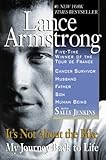 It's Not About the Bike: My Journey Back to Life by Lance Armstrong, Sally Jenkins
- The #1 New York Times bestseller with legs as strong as its author's.
It's Not About the Bike: My Journey Back to Life by Lance Armstrong, Sally Jenkins
- The #1 New York Times bestseller with legs as strong as its author's.
Lance Armstrong is one of the most talked about- and inspirational-sports figures of all time. He was Sports Illustrated 's 2002 Sportsman of the Year-and now, after his record-shattering string of Tour de France victories, some are proclaiming him the greatest athlete of all time.
This is the book in which he shares his journey through triumph, tragedy, transformation, and transcendence. It is the story of a world-famous cyclist and his fight against cancer.People around the world have found inspiration in the story of Lance Armstrong--a world-class athlete nearly struck down by cancer, only to recover and win the Tour de France, the multiday bicycle race famous for its grueling intensity. Armstrong is a thoroughgoing Texan jock, and the changes brought to his life by his illness are startling and powerful, but he's just not interested in wearing a hero suit. While his vocabulary is a bit on the he-man side (highest compliment to his wife: "she's a stud"), his actions will melt the most hard-bitten souls: a cancer foundation and benefit bike ride, his astonishing commitment to training that got him past countless hurdles, loyalty to the people and corporations that never gave up on him. There's serious medical detail here, which may not be for the faint of heart; from chemo to surgical procedures to his wife's in vitro fertilization, you won't be spared a single x-ray, IV drip, or unfortunate side effect. Athletes and coaches everywhere will benefit from the same extraordinary detail provided about his training sessions--every aching tendon, every rainy afternoon, and every small triumph during his long recovery is here in living color. It's Not About the Bike is the perfect title for this book about life, death, illness, family, setbacks, and triumphs, but not especially about the bike. --Jill Lightner
List Price: $15.00
Our Price: $5.98
More Info! |
 Zen Golf: Mastering the Mental Game by Joseph Parent
- Vijay Singh, Masters and PGA Champion, says, "ZEN GOLF is the best book there is for connecting golf and the mind together. It's for everyone, and you're going to enjoy it. I keep it in my golf bag and take it with me everywhere." Charles Howell III says, "The techniques in ZEN GOLF for working with negative thoughts are better than any other psychological approach." In chapters such as "Never Keep More Than a Hundred Thoughts in Your Mind During Your Swing", "Isn't Where You Have to Play It From Punishment Enough?" and "How to Enjoy a Bad Round of Golf", the Dr. Joe Parent, a PGA TOUR Instructor, guides golfers with simple yet powerful techniques to prepare for, execute, and, equally important, respond to the results of any golf shot. The author draws on his teaching experience and sense of humor to offer special methods that have led to amazing improvements in the games of professionals and amateurs alike. By applying classic insights and stories from the Buddhist tradition to the challenges of golf, ZEN GOLF shows you how to make your mind an ally instead of an enemy: how to stay calm, clear the interference that leads to poor shots, and eliminate bad habits and mental mistakes. Clear, concise, and enlightening, this book introduces a unique perspective combining modern psychology, Buddhist wisdom and professional golf instruction. Zen Golf shapes ancient philosophies into new teachings, leading golfers to the effortless focus and unconditional confidence of being in "the zone."
Zen Golf: Mastering the Mental Game by Joseph Parent
- Vijay Singh, Masters and PGA Champion, says, "ZEN GOLF is the best book there is for connecting golf and the mind together. It's for everyone, and you're going to enjoy it. I keep it in my golf bag and take it with me everywhere." Charles Howell III says, "The techniques in ZEN GOLF for working with negative thoughts are better than any other psychological approach." In chapters such as "Never Keep More Than a Hundred Thoughts in Your Mind During Your Swing", "Isn't Where You Have to Play It From Punishment Enough?" and "How to Enjoy a Bad Round of Golf", the Dr. Joe Parent, a PGA TOUR Instructor, guides golfers with simple yet powerful techniques to prepare for, execute, and, equally important, respond to the results of any golf shot. The author draws on his teaching experience and sense of humor to offer special methods that have led to amazing improvements in the games of professionals and amateurs alike. By applying classic insights and stories from the Buddhist tradition to the challenges of golf, ZEN GOLF shows you how to make your mind an ally instead of an enemy: how to stay calm, clear the interference that leads to poor shots, and eliminate bad habits and mental mistakes. Clear, concise, and enlightening, this book introduces a unique perspective combining modern psychology, Buddhist wisdom and professional golf instruction. Zen Golf shapes ancient philosophies into new teachings, leading golfers to the effortless focus and unconditional confidence of being in "the zone."
List Price: $17.95
Our Price: $10.19
More Info! |
 Hank Haney's Essentials of the Swing: A 7-Point Plan for Building a Better Swing and Shaping Your Shots by Hank Haney
-
Hank Haney's Essentials of the Swing: A 7-Point Plan for Building a Better Swing and Shaping Your Shots by Hank Haney
- "Hank knows more about ball flight and what controls it than anyone in the game." —Masters and British Open champion Mark O'Meara Get back to basics and build your best possible golf swing Lots of golf instructors can show you tricks to correct a hook or to stop hitting the ball fat, but these are just quick fixes that leave you with a swing built on mistakes. In Hank Haney's Essentials of the Swing, the world's premier expert on the golf swing takes you back to step one to master the essentials and build a complete, powerful, and consistent swing that will improve your game quickly and keep you playing better for years to come. This step-by-step guide brings you the same careful analytical approach that Hank has shared with the hundreds of touring pros who have been his students — including the world's #1 golfer. It walks you through every aspect of your swing, from grip to contact to follow-through, and shows you how to analyze ball flight to shape your shots and put the ball where you want it more frequently and with much more consistency. Packed with helpful pictures, invaluable practice tips, and insightful pointers on everything from club selection to the difference between a good miss and a bad miss, Hank Haney's Essentials of the Swing is the resource you need to hit the top of your game and stay there.
List Price: $24.95
Our Price: $15.23
More Info! |
 Match, The: The Day the Game of Golf Changed Forever by Mark Frost
- "It's difficult to beat a good golf book, be it a good yarn or a picture book . . . The golf is spectacular, the course more so, the descriptions luminous."
Match, The: The Day the Game of Golf Changed Forever by Mark Frost
- "It's difficult to beat a good golf book, be it a good yarn or a picture book . . . The golf is spectacular, the course more so, the descriptions luminous."
--USA Today "The untold story of golf's greatest money match, featuring Hogan and Nelson at Cypress Point, comes to life in . . . Mark Frost's gripping new book, The Match."
--Golf magazine "Frost weaves an exceptional narrative . . . It's a gripping tale--as good as James Patterson, John Grisham, or any other contemporary novelist could create. And all true. The match comes down to the 18th hole, and you'll be the winner once you turn the last page."
--Met Golfer "Frost masterfully puts the reader not just on the scene, but in the time, too, with terrific storytelling."
--The State (South Carolina) "Frost captures an elusive magic in this improbable matchup and what it meant for those who played and witnessed it."
--Publishers Weekly "The Match was a dream I never thought would come true. If I hadn't been there I wouldn't believe it myself, and if you know anything about sports or the game of golf, once you pick up this book you won't put it down. No one will ever see an event like this again. Fiction can't touch it."
--Ken Venturi The year: 1956. Four decades have passed since Eddie Lowery came to fame as the ten-year-old caddie to U.S. Open Champion Francis Ouimet. Now a wealthy car dealer and avid supporter of amateur golf, Lowery has just made a bet with fellow millionaire George Coleman. Lowery claims that two of his employees, amateur golfers Harvie Ward and Ken Venturi, cannot be beaten in a best-ball match. Lowery challenges Coleman to bring any two golfers of his choice to the course at 10 a.m. the next day to settle the issue. Coleman accepts the challenge and shows up with his own power team: Ben Hogan and Byron Nelson, the game's greatest living professionals, with fourteen major championships between them. In Mark Frost's peerless hands, complete with the recollections of all the participants, the story of this immortal foursome and the game they played that day--legendarily known in golf circles as the greatest private match ever played--comes to life with powerful, emotional impact and edge-of-your-seat suspense.
List Price: $15.99
Our Price: $9.25
More Info! |
 Ben Hogan's Five Lessons: The Modern Fundamentals of Golf by Ben Hogan
-
Ben Hogan's Five Lessons: The Modern Fundamentals of Golf by Ben Hogan
- You can shoot in the 70's! Ben Hogan has long believed that any golfer with average coordination can learn to break 80 if he applies himself intelligently -- and here, with Herbert Warren Wind, and artist Anthony Ravielli, he tells you, step by step, just how to go about it. The greatest golfer of our generation has distilled his experience as teacher, player, and observer of golf into a series of richly illustrated "visual instructions" that not only can improve your game and lower your score, but also can help you get even more fun out of what many people already think is the most enjoyable game in the world. Each chapter, each tested "fundamental" is explained and demonstrated with amazing detail and clarity. It's as though the master himself were right there at your elbow, giving you a personal lesson with the same thought and care that has gone into his lifetime of golf. The Modern Fundamentals of Golf is no instant and easy shortcut. There is none. But with Ben Hogan as your pro, you can master these basic movements very quickly. And then you can go on to develop a correct, powerful swing that will repeat. As Ben Hogan says, it's only then that you'll "discover golf for the first time."Ben Hogan's premise in this 1957 classic is driven home in bold letters: "THE AVERAGE GOLFER IS ENTIRELY CAPABLE OF BUILDING A REPEATING SWING AND BREAKING 80." Religions are founded on less, and Hogan's detailed analyses and illustrated demonstrations of grip, stance, posture, and the two basic components of the swing make up a sacred book. Though its very simplicity seems dated, this is the tome of technique that should serve as the foundation of every golf library.
List Price: $24.00
Our Price: $15.08
More Info! |
 Golf is Not a Game of Perfect by Dr. Bob Rotella
-
Golf is Not a Game of Perfect by Dr. Bob Rotella
- Dr. Bob Rotella is one of the hottest performance consultants in America today. Among his many professional clients are Nick Price (last year's Player of the Year), Tom Kite, Davis Love III, Pat Bradley, Brad Faxon, John Daly, and many others. Rotella, or "Doc," as most players refer to him, goes beyond just the usual mental aspects of the game and the reliance on specific techniques. What Rotella does here in this extraordinary book, and with his clients, is to create an attitude and a mindset about all aspects of a golfer's game, from mental preparation to competition. The most wonderful aspect of it all is that it is done in a conversational fashion, in a dynamic blend of anecdote and lesson. And, as some of the world's greatest golfers will attest, the results are spectacular. Golfers will improve their golf game and have more fun playing. Some of Rotella's maxims include: * On the first tee, a golfer must expect only two things of himself: to have fun, and to focus his mind properly on every shot.
* Golfers must learn to love 'the challenge when they hit a ball into the rough, trees, or sand. The alternatives -- anger, fear, whining, and cheating -- do no good.
* Confidence is crucial to good golf. Confidence is simply the aggregate of the thoughts you have about yourself.
* It is more important to be decisive than to be correct when preparing to play any golf shot or putt. Filled with delightful and insightful stories about golf and the golfers Rotella works with, Golf Is Not a Game of Perfect will improve the game of even the most casual weekend player.One of golf guru Jim Flick's mantras is that golf is 90 percent mental, and the other 10 percent is mental, too. Dr. Bob Rotella, a noted sports psychologist and performance consultant, roots around the golfer's mind to expose--and analyze--the doubts, the fears, and the frustrations that haunt anyone who's ever picked up a club and swung it. Through anecdote and aphorism he suggests how these mental and emotional hazards can be played through, and, regardless of skill level, how teeing off with a more positive and confident outlook will translate into better performance.
List Price: $22.95
Our Price: $7.99
More Info! |
 A Course Called Ireland: A Long Walk in Search of a Country, a Pint, and the Next Tee by Tom Coyne
- An epic Celtic sojourn in search of ancestors, nostalgia, and the world’s greatest round of golf
A Course Called Ireland: A Long Walk in Search of a Country, a Pint, and the Next Tee by Tom Coyne
- An epic Celtic sojourn in search of ancestors, nostalgia, and the world’s greatest round of golf
In his thirties, married, and staring down impending fatherhood, Tom Coyne was well familiar with the last refuge of the adult male: the golfing trip. Intent on designing a golf trip to end all others, Coyne looked to Ireland, the place where his father had taught him to love the game years before. As he studied a map of the island and plotted his itinerary, it dawned on Coyne that Ireland was ringed with golf holes. The country began to look like one giant round of golf, so Coyne packed up his clubs and set off to play all of it. And since Irish golfers didn’t take golf carts, neither would he. He would walk the entire way.
A Course Called Ireland is the story of a walking- averse golfer who treks his way around an entire country, spending sixteen weeks playing every seaside hole in Ireland and often battling through all four seasons in one Irish afternoon. Coyne plays everything from the top-ranked links in the world to nine-hole courses crowded with livestock. Along the way, he searches out his family’s roots, discovers that a once-poor country has been transformed by an economic boom, and finds that the only thing tougher to escape than Irish sand traps are Irish pubs. By turns hilarious and poetic, A Course Called Ireland is a magnificent tour of a vibrant land and a paean to the world’s greatest game.
List Price: $26.00
Our Price: $10.22
More Info! |
 The Art of the Short Game: Tour-Tested Secrets for Getting Up and Down by Stan Utley, Matthew Rudy
- "The hottest instructor in golf" (Sports Illustrated) takes on old-school gurus with a far more accessible, intuitive, and innovative approach to those essential chip shots, pitches, and bunker rescues.
The Art of the Short Game: Tour-Tested Secrets for Getting Up and Down by Stan Utley, Matthew Rudy
- "The hottest instructor in golf" (Sports Illustrated) takes on old-school gurus with a far more accessible, intuitive, and innovative approach to those essential chip shots, pitches, and bunker rescues.
Veteran golfers know that the secret to a lower score is a solid short game, but mastering those small strokes can be maddening—even for the pros. One of golf’s most revered instructors, Stan Utley now reveals the step-by-step tactics behind his revolutionary short-game techniques in The Art of the Short Game. After introducing readers to his groundbreaking philosophy that explains why most players don’t see all the shots available to them near the green, Utley moves on to shatter conventional wisdom about stance, grip, and ball position. From choosing the right clubs (including a checklist of must-haves that should always be in your bag) to spin reduction during chipping and fearless sand play, The Art of the Short Game demystifies the most aggravating shots on the links. Though Utley’s primer features a full set of drills, accompanied by more than seventy-five photos, his approach is far removed from the monotonous, mechanical instruction of yesteryear. Giving a time-tested secret weapon to every golfer at every level, Utley’s short-game methods turn trouble shots into triumph.
List Price: $25.00
Our Price: $12.99
More Info! |
 The Best Instruction Book Ever! Golf Magazine's Top 100 Teachers Show You the Fastest Ways to Shoot Lower Scores! by Editors of Golf Magazine
- Want simple tips to help smash it past your pals? Want to know how to generate the most power from your swing, put it close with irons, and stop three-putting? GOLF Magazine's Top 100 Teachers combine their knowledge to help you get your game back in shape with their first book, "The Best Instruction Book Ever!"
The Best Instruction Book Ever! Golf Magazine's Top 100 Teachers Show You the Fastest Ways to Shoot Lower Scores! by Editors of Golf Magazine
- Want simple tips to help smash it past your pals? Want to know how to generate the most power from your swing, put it close with irons, and stop three-putting? GOLF Magazine's Top 100 Teachers combine their knowledge to help you get your game back in shape with their first book, "The Best Instruction Book Ever!"
This book would include the simple, direct and helpful tips that make the YOUR GAME section in GOLF Magazine the most popular part of the magazine. The book will be concentrated into different key areas: Driving, Iron Play, Chipping, Putting, Fault Fixes, Trouble Shots. Stunning photography from the world's best golf instruction photographers would give the book an extra edge in the marketplace as well as three dimensional diagrams which take instruction to a new level.
List Price: $29.95
Our Price: $18.86
More Info! |
 Are You Kidding Me?: The Story of Rocco Mediate's Extraordinary Battle with Tiger Woods at the US Open by Rocco Mediate, John Feinstein
- June 2008's US Open produced one of the most unexpected and dramatic showdowns in golf history. Day after day the invincible Tiger Woods was challenged by Rocco Mediate, a respected journeyman. On Sunday, both ended play tied at par, forcing a playoff. Defying expectations, Mediate played Woods to yet another tie, losing only after forcing a sudden-death showdown.
Are You Kidding Me?: The Story of Rocco Mediate's Extraordinary Battle with Tiger Woods at the US Open by Rocco Mediate, John Feinstein
- June 2008's US Open produced one of the most unexpected and dramatic showdowns in golf history. Day after day the invincible Tiger Woods was challenged by Rocco Mediate, a respected journeyman. On Sunday, both ended play tied at par, forcing a playoff. Defying expectations, Mediate played Woods to yet another tie, losing only after forcing a sudden-death showdown.
Through it all, Rocco Mediate emerged as one of the most likable, open, and fascinating golfers. In ARE YOU KIDDING ME?, he tells the full story of these five life-changing days. With John Feinstein, whose insider knowledge of the golf world is unparalleled, Mediate relives one of sport's greatest feats, how one man overcame every obstacle to challenge the game's finest.
List Price: $26.99
Our Price: $13.42
More Info! |
 The Downhill Lie: A Hacker's Return to a Ruinous Sport (Vintage) by Carl Hiaasen
- Bestselling author Carl Hiaasen wisely quit golfing in 1973. But some ambitions refuse to die, and as the years passed and the memories of slices and hooks faded, it dawned on Carl that there might be one thing in life he could do better in middle age than he could as a youth. So gradually he ventured back to the rolling, frustrating green hills of the golf course, where he ultimately—and foolishly—agreed to compete in a country-club tournament against players who can actually hit the ball. Filled with harrowing divots, deadly doglegs, and excruciating sandtraps, The Downhill Lie is a hilarious chronicle of mis-adventure that will have you rolling with laughter.
The Downhill Lie: A Hacker's Return to a Ruinous Sport (Vintage) by Carl Hiaasen
- Bestselling author Carl Hiaasen wisely quit golfing in 1973. But some ambitions refuse to die, and as the years passed and the memories of slices and hooks faded, it dawned on Carl that there might be one thing in life he could do better in middle age than he could as a youth. So gradually he ventured back to the rolling, frustrating green hills of the golf course, where he ultimately—and foolishly—agreed to compete in a country-club tournament against players who can actually hit the ball. Filled with harrowing divots, deadly doglegs, and excruciating sandtraps, The Downhill Lie is a hilarious chronicle of mis-adventure that will have you rolling with laughter.
List Price: $14.00
Our Price: $7.66
More Info! |
|
 The Beckham Experiment: How the World's Most Famous Athlete Tried to Conquer America by Grant Wahl
- In 2007, David Beckham, the golden boy of soccer, shocked the international sports world when he signed a five-year contract with an American team, the Los Angeles Galaxy. Under the direction of his manager, Simon Fuller, the mastermind behind American Idol and the Spice Girls, Beckham was ready for a monumental challenge and a risky adventure–ready, as Fuller put it, to earn his stripes Stateside. Could he pull off what no player had ever accomplished (including Pelé in the 1970s) and transform soccer into one of the most popular spectator sports in America? It was a bold experiment: failure meant a team, a league, a sport, and Beckham himself might miss their chance to hit primetime in the U.S.
The Beckham Experiment: How the World's Most Famous Athlete Tried to Conquer America by Grant Wahl
- In 2007, David Beckham, the golden boy of soccer, shocked the international sports world when he signed a five-year contract with an American team, the Los Angeles Galaxy. Under the direction of his manager, Simon Fuller, the mastermind behind American Idol and the Spice Girls, Beckham was ready for a monumental challenge and a risky adventure–ready, as Fuller put it, to earn his stripes Stateside. Could he pull off what no player had ever accomplished (including Pelé in the 1970s) and transform soccer into one of the most popular spectator sports in America? It was a bold experiment: failure meant a team, a league, a sport, and Beckham himself might miss their chance to hit primetime in the U.S.
With unprecedented access to the Galaxy and one-on-one interviews with Beckham, veteran Sports Illustrated writer Grant Wahl focuses on the inner circle of the experiment: Beckham, Galaxy leading scorer Landon Donovan, Simon Fuller, controversial former coach Ruud Gullit, outspoken former Galaxy president Alexi Lalas, and Mrs. Victoria “Posh Spice” Beckham. Wahl takes readers behind the scenes, on the road with the team and inside the locker room, to reveal just what happened on and off the field when the most renowned player in the world left the glamour of European soccer to play in a country that has yet to fully embrace the sport. We find out what his teammates really think of their superstar captain, who was calling the shots behind the scenes, how Beckham’s management conducted a shadow takeover of the Galaxy organization, and if the team plans to embrace him–or not–when he returns from AC Milan for the 2009 season.
The Beckham Experiment is a no-holds-barred account of ego clashes and epic winless streaks, rivalries and resentments, big gambles and great expectations, cultural and class collisions, and ultimately the volatile mix of celebrity and professional sports. As Beckham embarks on his third season with the Galaxy, the question remains: even for a player the caliber of David Beckham, are some goals out of reach?
List Price: $24.99
Our Price: $14.21
More Info! |
 ChiRunning by Danny Dreyer
-
ChiRunning by Danny Dreyer
- More than 24 million people run in the United States alone, but 65 percent will have to stop at least once this year because of injury. Still others will choose to run through the pain. But in this groundbreaking book, ultramarathoner Danny Dreyer teaches us the running technique he created to heal and prevent injuries and also to run faster, farther, and with much less effort at any age. ChiRunning employs the deep power reserves in the core muscles of the trunk, an approach that grows out of such disciplines as yoga, Pilates, and t'ai chi. This excellent step-by-step program offers training principles and is easily learned. Dramatically reduce your potential for injury Make knee pain and shin splints a thing of the past Greatly reduce post-run recovery time Create a safe and effective training program Make running any distance enjoyable whether you're a beginning runner or a seasoned competitor
List Price: $14.95
Our Price: $5.92
More Info! |
 The New Rules of Lifting for Women: Lift Like a Man, Look Like a Goddess by Lou Schuler, M.S., Cassandra Forsythe, Alwyn Cosgrove
- In The New Rules of Lifting for Women, authors Lou Schuler, Cassandra Forsythe, and Alwyn Cosgrove present a comprehensive strength, conditioning, and nutrition plan destined to revolutionize the way women work out. All the latest studies prove that strength training, not aerobics, provides the key to losing fat and building a fit, strong body.
The New Rules of Lifting for Women: Lift Like a Man, Look Like a Goddess by Lou Schuler, M.S., Cassandra Forsythe, Alwyn Cosgrove
- In The New Rules of Lifting for Women, authors Lou Schuler, Cassandra Forsythe, and Alwyn Cosgrove present a comprehensive strength, conditioning, and nutrition plan destined to revolutionize the way women work out. All the latest studies prove that strength training, not aerobics, provides the key to losing fat and building a fit, strong body.
This book refutes the misconception that women will “bulk up” if they lift heavy weights. Nonsense! It’s tough enough for men to pack on muscle, and they have much more of the hormone necessary to build muscle: natural testosterone. Muscles need to be strengthened to achieve a lean, healthy look. Properly conditioned muscles increase metabolism and promote weight loss—it’s that simple.
The program demands that women put down the “Barbie” weights, step away from the treadmill, and begin a strength and conditioning regime for the natural athlete in every woman.
The New Rules of Lifting for Women, now in paperback, will change the way women see fitness, nutrition, and their own bodies.
List Price: $15.95
Our Price: $9.62
More Info! |
 The Time-Crunched Cyclist: Fit, Fast, and Powerful in 6 Hours a Week by Chris Carmichael, Jim Rutberg
-
The Time-Crunched Cyclist: Fit, Fast, and Powerful in 6 Hours a Week by Chris Carmichael, Jim Rutberg
- As cycling's popularity grows with men and women in their thirties, forties, fifties, and beyond, the traditional ideas about training for endurance sports need a new approach to reflect the daily challenges faced by parents and working professionals. In The Time-Crunched Cyclist, Chris Carmichael presents that new approach to cycling training. Using elements from the same program he designed for Tour de France winner Armstrong, this guide shows how to build competitive cycling fitness on a realistic schedule — a schedule that fits into the busy lives of today's active middle-agers. Complete with training plans, case studies, nutritional guidelines, and success stories, The Time-Crunched Cyclist shows cyclists how to push the pace in the local group ride, have fun, and perform well in local races, or tackle a challenging 100-mile fundraiser ride without committing to a high-volume training program.
List Price: $19.95
Our Price: $13.57
More Info! |
Zen Golf: Mastering the Mental Game by Joseph Parent
- Vijay Singh, Masters and PGA Champion, says, "ZEN GOLF is the best book there is for connecting golf and the mind together. It's for everyone, and you're going to enjoy it. I keep it in my golf bag and take it with me everywhere." Charles Howell III says, "The techniques in ZEN GOLF for working with negative thoughts are better than any other psychological approach." In chapters such as "Never Keep More Than a Hundred Thoughts in Your Mind During Your Swing", "Isn't Where You Have to Play It From Punishment Enough?" and "How to Enjoy a Bad Round of Golf", the Dr. Joe Parent, a PGA TOUR Instructor, guides golfers with simple yet powerful techniques to prepare for, execute, and, equally important, respond to the results of any golf shot. The author draws on his teaching experience and sense of humor to offer special methods that have led to amazing improvements in the games of professionals and amateurs alike. By applying classic insights and stories from the Buddhist tradition to the challenges of golf, ZEN GOLF shows you how to make your mind an ally instead of an enemy: how to stay calm, clear the interference that leads to poor shots, and eliminate bad habits and mental mistakes. Clear, concise, and enlightening, this book introduces a unique perspective combining modern psychology, Buddhist wisdom and professional golf instruction. Zen Golf shapes ancient philosophies into new teachings, leading golfers to the effortless focus and unconditional confidence of being in "the zone."
List Price: $17.95
Our Price: $10.19
More Info! |
 Strength Training Anatomy by Frederic Delavier
- Discover for yourself the magic of Strength Training Anatomy, one of the best-selling strength training books ever published!
Strength Training Anatomy by Frederic Delavier
- Discover for yourself the magic of Strength Training Anatomy, one of the best-selling strength training books ever published!
Get an intricate look at strength training from the inside out. Strength Training Anatomy, with over 850,000 copies already sold, brings anatomy to life with more than 400 full-color illustrations. This detailed artwork showcases the muscles used during each exercise and delineates how these muscles interact with surrounding joints and skeletal structures. Like having an X-ray for each exercise, the information gives you a multilateral view of strength training not seen in any other resource.
This updated bestseller also contains new information on common strength training injuries and preventive measures to help you exercise safely. Chapters are devoted to each major muscle group, with 115 total exercises for arms, shoulders, chest, back, legs, buttocks, and abdomen.
List Price: $21.95
Our Price: $13.50
More Info! |
|
Hank Haney's Essentials of the Swing: A 7-Point Plan for Building a Better Swing and Shaping Your Shots by Hank Haney
- "Hank knows more about ball flight and what controls it than anyone in the game." —Masters and British Open champion Mark O'Meara Get back to basics and build your best possible golf swing Lots of golf instructors can show you tricks to correct a hook or to stop hitting the ball fat, but these are just quick fixes that leave you with a swing built on mistakes. In Hank Haney's Essentials of the Swing, the world's premier expert on the golf swing takes you back to step one to master the essentials and build a complete, powerful, and consistent swing that will improve your game quickly and keep you playing better for years to come. This step-by-step guide brings you the same careful analytical approach that Hank has shared with the hundreds of touring pros who have been his students — including the world's #1 golfer. It walks you through every aspect of your swing, from grip to contact to follow-through, and shows you how to analyze ball flight to shape your shots and put the ball where you want it more frequently and with much more consistency. Packed with helpful pictures, invaluable practice tips, and insightful pointers on everything from club selection to the difference between a good miss and a bad miss, Hank Haney's Essentials of the Swing is the resource you need to hit the top of your game and stay there.
List Price: $24.95
Our Price: $15.23
More Info! |
 Five Lessons: Modern Fundamentals of Golf by Ben Hogan
- The building blocks of winning golf -- from one of the masters of the game.
Five Lessons: Modern Fundamentals of Golf by Ben Hogan
- The building blocks of winning golf -- from one of the masters of the game.Ben Hogan, one of the greatest golfers in the history of the sport, believed that any golfer with average coordination can learn to break 80 -- if one applies oneself patiently and intelligently. With the techniques revealed in this classic book, you can learn how to make your game work from tee to green, step-by-step and stroke by stroke. In each chapter, a different tested fundamental is explained and demonstrated with clear illustrations -- as though Hogan were giving you a personal lesson with the same skill and precision that made him a legend. Whether you're a novice player or an experienced pro, Ben Hogan's Five Lessons is a must-have reference for anyone who knows that fundamentals are where champions begin.Ben Hogan's premise in this 1957 classic is driven home in bold letters: "THE AVERAGE GOLFER IS ENTIRELY CAPABLE OF BUILDING A REPEATING SWING AND BREAKING 80." Religions are founded on less, and Hogan's detailed analyses and illustrated demonstrations of grip, stance, posture, and the two basic components of the swing make up a sacred book. Though its very simplicity seems dated, this is the tome of technique that should serve as the foundation of every golf library.
List Price: $12.00
Our Price: $12.06
More Info! |
 Runner's World The Runner's Body: How the Latest Exercise Science Can Help You Run Stronger, Longer, and Faster (Runners World) by Ross Tucker, Jonathan Dugas, Matt Fitzgerald
-
Runner's World The Runner's Body: How the Latest Exercise Science Can Help You Run Stronger, Longer, and Faster (Runners World) by Ross Tucker, Jonathan Dugas, Matt Fitzgerald
- Every day scientists learn more about how the body adapts to the stress of running—and how various body systems contribute to running performance. Leading the charge is a fresh generation of brilliant young exercise physiologists including Ross Tucker and Jonathan Dugas, whose work has demolished many long-standing beliefs about running. Now Tucker and Dugas, whose blog, Science of Sport, has already created a devoted readership, join with esteemed fitness author Matt Fitzgerald to provide a captivating tour of the human body from the runner’s perspective. Focusing on how runners at all levels can improve their health and performance, The Runner’s Body offers in a friendly, accessible tone, the newest, most surprising, and most helpful scientific discoveries about every aspect of the sport—from how best to nourish the runner’s body to safe and legal ways to increase oxygen delivery to the muscles. Full of surprising facts, practical sidebars, and graphical elements, The Runner’s Body is a must-have resource for anyone who wants to become a better—and healthier—runner.
List Price: $17.99
Our Price: $9.62
More Info! |
 Starting Strength (2nd edition) by Mark Rippetoe, Lon Kilgore
- Starting Strength: Basic Barbell Training is the new expanded version of the book that has been called "the best and most useful of fitness books." It picks up where Starting Strength: A Simple and Practical Guide for Coaching Beginners leaves off. With all new graphics and more than 750 illustrations, a more detailed analysis of the five most important exercises in the weight room, and a new chapter dealing with the most important assistance exercises, Basic Barbell Training offers the most complete examination in print of the most effective way to exercise.
Starting Strength (2nd edition) by Mark Rippetoe, Lon Kilgore
- Starting Strength: Basic Barbell Training is the new expanded version of the book that has been called "the best and most useful of fitness books." It picks up where Starting Strength: A Simple and Practical Guide for Coaching Beginners leaves off. With all new graphics and more than 750 illustrations, a more detailed analysis of the five most important exercises in the weight room, and a new chapter dealing with the most important assistance exercises, Basic Barbell Training offers the most complete examination in print of the most effective way to exercise.
List Price: $29.95
Our Price: $26.96
More Info! |
 Blue Book of Gun Values by S. P. Fjestad
- 21st Edition Blue Book of Gun Values by S.P. Fjestad is a softcover firearms pricing book published annually. The current 21st Edition contains 1,560 pages, and includes pricing and detailed technical information on domestic, foreign and military guns (both new and discontinued), major trademark antiques, commemoratives/special editions, and new 2000 models. Included in the 21st Edition is a 48 page digital color Photo Percentage Grading System (the industry standard) showing rifles, shotguns and handguns in various percentages of condition from 0%-100%. The Blue Book of Gun Values is now being used by the NRA, most major insurance companies, thousands of gun/pawn shops, domestic and international collectors, and other firearms industry professionals to accurately determine gun values and other related data. With over 50,000 prices covering more than 600 manufacturers, and 1/2 million words of text, the 21st Edition is the most complete and up-to-date publication of its type in use.
Blue Book of Gun Values by S. P. Fjestad
- 21st Edition Blue Book of Gun Values by S.P. Fjestad is a softcover firearms pricing book published annually. The current 21st Edition contains 1,560 pages, and includes pricing and detailed technical information on domestic, foreign and military guns (both new and discontinued), major trademark antiques, commemoratives/special editions, and new 2000 models. Included in the 21st Edition is a 48 page digital color Photo Percentage Grading System (the industry standard) showing rifles, shotguns and handguns in various percentages of condition from 0%-100%. The Blue Book of Gun Values is now being used by the NRA, most major insurance companies, thousands of gun/pawn shops, domestic and international collectors, and other firearms industry professionals to accurately determine gun values and other related data. With over 50,000 prices covering more than 600 manufacturers, and 1/2 million words of text, the 21st Edition is the most complete and up-to-date publication of its type in use.
List Price: $49.95
Our Price: $31.81
More Info! |
 The Gun Digest Book Of Concealed Carry by Massad Ayoob
- In addition to tactical aspects of self-defense, practical information like choosing the right firearm and ammunition, used gun purchases, and all legal aspects of self-defense with a gun are also extensively covered in this complete and authoritative look at concealed carry.
The Gun Digest Book Of Concealed Carry by Massad Ayoob
- In addition to tactical aspects of self-defense, practical information like choosing the right firearm and ammunition, used gun purchases, and all legal aspects of self-defense with a gun are also extensively covered in this complete and authoritative look at concealed carry.
List Price: $24.99
Our Price: $14.99
More Info! |
 Abc's Of Reloading: The Definitive Guide For Novice To Expert by Bill Chevalier
- The best experiences are based on best practices, and usually that means having a strong grasp on the basics. This new edition of the most innovative and respected reloading guide takes readers through every step of the reloading process, beginning with selecting necessary tools and accessories, moving into step-by-step instructions for reloading rifle, pistol and shotgun ammunition, and finally, into more specific aspects of the hobby, including benchrest loading, competition and hunting loads. ABCs of Reloading makes a complex subject understandable and rewarding.
Abc's Of Reloading: The Definitive Guide For Novice To Expert by Bill Chevalier
- The best experiences are based on best practices, and usually that means having a strong grasp on the basics. This new edition of the most innovative and respected reloading guide takes readers through every step of the reloading process, beginning with selecting necessary tools and accessories, moving into step-by-step instructions for reloading rifle, pistol and shotgun ammunition, and finally, into more specific aspects of the hobby, including benchrest loading, competition and hunting loads. ABCs of Reloading makes a complex subject understandable and rewarding.
List Price: $24.99
Our Price: $13.89
More Info! |
 The L.L. Bean Ultimate Book of Fly Fishing (L. L. Bean) by Macauley Lord, Dick Talleur, Dave Whitlock
-
The L.L. Bean Ultimate Book of Fly Fishing (L. L. Bean) by Macauley Lord, Dick Talleur, Dave Whitlock
- The Lyons Press is proud to present The L.L. Bean Ultimate Book of Fly Fishing, an exciting full-color book for beginning and expert fly anglers alike. Brought to you in conjunction with L.L. Bean, America's most trusted name in outdoor apparel, and written by unquestioned experts in the field, this book is divided into four essential parts--General Fly Fishing, Fly Fishing for Bass, Fly Casting, and Fly Tying--and covers each with in-depth analysis in clear, easy-to-follow language. Learn about assembly of fly tackle; the biology of fish; natural fish foods and how to imitate them; safety techniques; bass flies; where to find bass; the eleven habits of highly effective fly casters; the basic four-part cast; the roll cast; the basics of fly tying; types of flies; the top ten most popular and successful fly patterns; and much more. The L.L. Bean Ultimate Book of Fly Fishing is the perfect gift for seasoned anglers looking to improve their skills, novices picking up a fly rod for the first time, and for all those who have ever dreamed of trading in their suits for a pair of waders.
List Price: $24.95
Our Price: $13.30
More Info! |
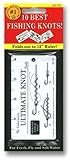 Fisherman's Ultimate Knot Guide by John E. Sherry
- Ten best fishing knots are clearly illustrated on three waterproof plastic cards. Handy size for pocket, vest, tackle box or boat. Bonus: Also folds out to a twelve inch ruler! Best selling fishing knot guide in the USA with over 250,000 sold.
Fisherman's Ultimate Knot Guide by John E. Sherry
- Ten best fishing knots are clearly illustrated on three waterproof plastic cards. Handy size for pocket, vest, tackle box or boat. Bonus: Also folds out to a twelve inch ruler! Best selling fishing knot guide in the USA with over 250,000 sold.
List Price: $4.95
Our Price: $4.95
More Info! |
 What Fish Don't Want You to Know: An Insider's Guide to Freshwater Fishing by Frank Baron
- Expert, field-tested advice for anglers at every level
What Fish Don't Want You to Know: An Insider's Guide to Freshwater Fishing by Frank Baron
- Expert, field-tested advice for anglers at every level This comprehensive, entertaining, and foolproof guide covers everything novice and avid anglers need to know to catch freshwater fish--from bass and trout to salmon and walleye--and reveals the two basic ways to catch ALL fish. With numerous photographs and illustrations, easy-to-follow instructions, and a liberal dose of good humor, the author shares his 40 years of angling expertise, including how to: - Read the waters and the weather
- Select the right baits and lures for particular fish and situations
- Know which gear is essential and which is merely desirable
- Get maximum results on a minimum budget
- Practice proper etiquette and ethics
- Turn a tough day into a great one with dozens of tricks and tips
Laced with amusing anecdotes and commonsense, this book will unlock the secrets of fishing and teach anglers how to catch more fish.
List Price: $16.95
Our Price: $10.03
More Info! |
 The Big One: An Island, an Obsession, and the Furious Pursuit of a Great Fish by David Kinney
-
The Big One: An Island, an Obsession, and the Furious Pursuit of a Great Fish by David Kinney
- Renowned for its pristine beaches and celebrity inhabitants, Martha’s Vineyard is one of the most exclusive destinations in America. But each September, after the tourists clear out, thousands of fishermen take back the beaches to compete in the Vineyard’s annual fishing derby, a monthlong contest that pits plumbers against investment bankers, schoolkids against senior citizens, and natives against newcomers in a round-the-clock hunt for a great fish. Island immortality is at stake, and history has proven that anyone can win it: teenage girls, dozing fishermen, complete amateurs. In The Big One, Pulitzer Prize–winning journalist David Kinney takes readers behind the scenes at the derby to chronicle thirty-five days of fish-addled hope and heartbreak. He captures all the action and introduces us to an eccentric gallery of characters that includes: Dick Hathaway, the crotchety legend who once caught a bluefish from a helicopter; Janet Messineo, a recovering alcoholic who says that striped bass saved her life; and Lev Wlodyka, a cagey local whose next fish will spark a storm of controversy and throw the tournament into turmoil. The Big One is a hugely entertaining story of passion and obsession that does for fishing what Friday Night Lights did for football.
List Price: $24.00
Our Price: $14.35
More Info! |
|
|

 amazon.com
 amazon.uk
 amazon.ca
 amazon.fr
 amazon.de
 amazon.jp
 The Art of Racing in the Rain: A Novel by Garth Stein
 Guide to Fly Fishing Knots: A Basic Streamside Guide for Fly Fishing Knots, Tippets, and Leader Formulas by Larry V. Notley
 Horn of the Hunter: The Story of an African Hunt by R. Ruark