 How to Win Friends & Influence People by Dale Carnegie
-
How to Win Friends & Influence People by Dale Carnegie
- You can go after the job you want...and get it! You can take the job you have...and improve it! You can take any situation you're in...and make it work for you! For over 50 years the rock-solid, time-tested advice in this book has carried thousands of now famous people up the ladder of success in their business and personal lives. Now this phenomenal book has been revised and updated to help readers achieve their maximum potential in the complex and competitive 90s! Learn: The six ways to make people like you The twelve ways to win people to your way of thinking The nine ways to change people without arousing resentment and much, much more!This grandfather of all people-skills books was first published in 1937. It was an overnight hit, eventually selling 15 million copies. How to Win Friends and Influence People is just as useful today as it was when it was first published, because Dale Carnegie had an understanding of human nature that will never be outdated. Financial success, Carnegie believed, is due 15 percent to professional knowledge and 85 percent to "the ability to express ideas, to assume leadership, and to arouse enthusiasm among people." He teaches these skills through underlying principles of dealing with people so that they feel important and appreciated. He also emphasizes fundamental techniques for handling people without making them feel manipulated. Carnegie says you can make someone want to do what you want them to by seeing the situation from the other person's point of view and "arousing in the other person an eager want." You learn how to make people like you, win people over to your way of thinking, and change people without causing offense or arousing resentment. For instance, "let the other person feel that the idea is his or hers," and "talk about your own mistakes before criticizing the other person." Carnegie illustrates his points with anecdotes of historical figures, leaders of the business world, and everyday folks. --Joan Price
List Price: $7.99
Our Price: $3.80
More Info! |
[an error occurred while processing this directive]
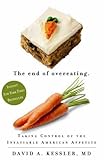 The End of Overeating: Taking Control of the Insatiable American Appetite by David Kessler
-
The End of Overeating: Taking Control of the Insatiable American Appetite by David Kessler
- Most of us know what it feels like to fall under the spell of food when one slice of pizza turns into half a pie, or a handful of chips leads to an empty bag. But it s harder to understand why we can't seem to stop eating even when we know better. When we want so badly to say "no," why do we continue to reach for food? Dr. David Kessler, the dynamic former FDA commissioner who reinvented the food label and tackled the tobacco industry, now reveals how the food industry has hijacked the brains of millions of Americans. The result? America s number-one public health issue. Dr. Kessler cracks the code of overeating by explaining how our bodies and minds are changed when we consume foods that contain sugar, fat, and salt. Food manufacturers create products by manipulating these ingredients to stimulate our appetites, setting in motion a cycle of desire and consumption that ends with a nation of overeaters. The End of Overeating explains for the first time why it is exceptionally difficult to resist certain foods and why it s so easy to overindulge. Dr. Kessler met with top scientists, physicians, and food industry insiders. The End of Overeating uncovers the shocking facts about how we lost control over our eating habits and how we can get it back. Dr. Kessler presents groundbreaking research, along with what is sure to be a controversial view inside the industry that continues to feed a nation of overeaters from popular brand manufacturers to advertisers, chain restaurants, and fast food franchises. For the millions of people struggling with weight as well as for those of us who simply don't understand why we can't seem to stop eating our favorite foods, Dr. Kessler s cutting-edge investigation offers new insights and helpful tools to help us find a solution. There has never been a more thorough, compelling, or in-depth analysis of why we eat the way we do.
List Price: $25.95
Our Price: $14.49
More Info! |
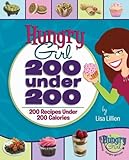 Hungry Girl: 200 Under 200: 200 Recipes Under 200 Calories by Lisa Lillien
- Hungry Girl mania is sweeping the nation! The New York Times bestselling phenomenon delivers even more yum-tastic recipes in an easy-to-use cookbook containing 200 Hungry Girl recipes all under 200 calories. Recipes include:
Hungry Girl: 200 Under 200: 200 Recipes Under 200 Calories by Lisa Lillien
- Hungry Girl mania is sweeping the nation! The New York Times bestselling phenomenon delivers even more yum-tastic recipes in an easy-to-use cookbook containing 200 Hungry Girl recipes all under 200 calories. Recipes include: * H-O-T Hot Boneless Buffalo Wings
* Sassy Southwestern Roll-Ups
* Cheesy-Good Cornbread Muffins
* Holy Moly Guacamole
* HG s So Low Mein w/Chicken
* Cheeseburger Lettuce Cups ;
* Chocolate Chip Cookie Crisp Puddin Shake
* Swirls Gone Wild Cheesecake Brownies
* Personal Pretzel-Bottomed Ice Cream Pie, and many more. Told with Lisa's signature wit and sassy style, these recipes are as fun to read as they are to make!
List Price: $19.95
Our Price: $11.00
More Info! |
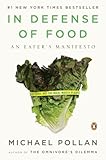 In Defense of Food: An Eater's Manifesto by Michael Pollan
- The companion volume to The New York Times bestseller The OmnivoreÂ’s Dilemma
In Defense of Food: An Eater's Manifesto by Michael Pollan
- The companion volume to The New York Times bestseller The OmnivoreÂ’s Dilemma
Michael PollanÂ’s lastbook , The OmnivoreÂ’s Dilemma, launched a national conversation about the American way of eating; now In Defense of Food shows us how to change it, one meal at a time. Pollan proposes a new answer to the question of what we should eat that comes down to seven simple but liberating words: Eat food. Not too much. Mostly plants. PollanÂ’s bracing and eloquent manifesto shows us how we can start making thoughtful food choices that will enrich our lives, enlarge our sense of what it means to be healthy, and bring pleasure back to eating.Amazon Significant Seven, January 2008: Food is the one thing that Americans hate to love and, as it turns out, love to hate. What we want to eat has been ousted by the notion of what we should eat, and it's at this nexus of hunger and hang-up that Michael Pollan poses his most salient question: where is the food in our food? What follows in In Defense of Food is a series of wonderfully clear and thoughtful answers that help us omnivores navigate the nutritional minefield that's come to typify our food culture. Many processed foods vie for a spot in our grocery baskets, claiming to lower cholesterol, weight, glucose levels, you name it. Yet Pollan shows that these convenient "healthy" alternatives to whole foods are appallingly inconvenient: our health has a nation has only deteriorated since we started exiling carbs, fats--even fruits--from our daily meals. His razor-sharp analysis of the American diet (as well as its architects and its detractors) offers an inspiring glimpse of what it would be like if we could (a la Humpty Dumpty) put our food back together again and reconsider what it means to eat well. In a season filled with rallying cries to lose weight and be healthy, Pollan's call to action—"Eat food. Not too much. Mostly plants."--is a program I actually want to follow. --Anne Bartholomew
List Price: $15.00
Our Price: $7.06
More Info! |
 Master Your Metabolism: The 3 Diet Secrets to Naturally Balancing Your Hormones for a Hot and Healthy Body! by Jillian Michaels, Mariska van Aalst
- Does it feel as if you’re fighting your body to lose even one pound—or just to maintain your current weight? Respected health and wellness expert and bestselling author Jillian Michaels has been there, too. So she consulted top experts in the field of metabolism and discovered that she’d inadvertently been abusing her endocrine system for years. After “fixing” her own metabolism, she decided to share what she learned by devising this simple, 3-phase plan that engages all the weight-loss hormones (including the friendly HGH, testosterone, DHEA; and the not-so-friendly: insulin, cortisol, and excess estrogen).
Master Your Metabolism: The 3 Diet Secrets to Naturally Balancing Your Hormones for a Hot and Healthy Body! by Jillian Michaels, Mariska van Aalst
- Does it feel as if you’re fighting your body to lose even one pound—or just to maintain your current weight? Respected health and wellness expert and bestselling author Jillian Michaels has been there, too. So she consulted top experts in the field of metabolism and discovered that she’d inadvertently been abusing her endocrine system for years. After “fixing” her own metabolism, she decided to share what she learned by devising this simple, 3-phase plan that engages all the weight-loss hormones (including the friendly HGH, testosterone, DHEA; and the not-so-friendly: insulin, cortisol, and excess estrogen).
In Master Your Metabolism, discover how to:
•REMOVE “anti-nutrients” from your diet
•RESTORE foods that speak directly to fat-burning genes
•REBALANCE energy and your hormones for effortless weight loss
Michaels offers a wealth of information throughout, including: shopping lists and online shopping resources, hormone-trigger food charts, how to eat “power nutrient” foods on a budget, smart strategies for eating out, quick and easy recipes, as well as mini-programs for addressing PMS, andropause, metabolic syndrome, PCOS, and menopause.
List Price: $26.00
Our Price: $14.45
More Info! |
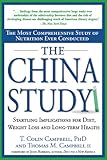 The China Study: The Most Comprehensive Study of Nutrition Ever Conducted and the Startling Implications for Diet, Weight Loss and Long-term Health by T. Colin Campbell, Thomas M. Campbell II
-
The China Study: The Most Comprehensive Study of Nutrition Ever Conducted and the Startling Implications for Diet, Weight Loss and Long-term Health by T. Colin Campbell, Thomas M. Campbell II
- Referred to as the "Grand Prix of epidemiology" by The New York Times, this study examines more than 350 variables of health and nutrition with surveys from 6,500 adults in more than 2,500 counties across China and Taiwan, and conclusively demonstrates the link between nutrition and heart disease, diabetes, and cancer. While revealing that proper nutrition can have a dramatic effect on reducing and reversing these ailments as well as curbing obesity, this text calls into question the practices of many of the current dietary programs, such as the Atkins diet, that are widely popular in the West. The politics of nutrition and the impact of special interest groups in the creation and dissemination of public information are also discussed.
List Price: $16.95
Our Price: $10.08
More Info! |
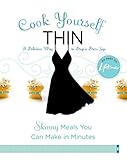 Cook Yourself Thin: Skinny Meals You Can Make in Minutes by Lifetime Television
- Lose weight without losing your mind!
Cook Yourself Thin: Skinny Meals You Can Make in Minutes by Lifetime Television
- Lose weight without losing your mind!
Cook Yourself Thin is a healthy, delicious way to drop a dress size without all the gimmicks. The ladies of "Cook Yourself Thin," a new Lifetime reality show, offer 80 easy, accessible recipes in this companion cookbook that teaches readers how to cut calories without compromising taste. For some of us, losing weight has always been a struggle. The challenge: figuring out how to cook healthy, low-fat foods that won't leave you hungry, bored, or running for a gallon of ice cream! Cook Yourself Thin shows how to cut calories, change diets, and improve health without sacrificing the foods we love. Cook Yourself Thin is not a fad diet. It gives skinny alternatives to your cravings. You can't live without your chocolate cake or mac 'n' cheese? You don't have to! (See Deep Dark Chocolate Cake, page 197.) There's never enough time to cook? Cook Yourself Thin keeps it simple─with easy instructions and fun recipes you'll want to make again and again. What are you waiting for? Cook Yourself Thin!
List Price: $19.99
Our Price: $9.90
More Info! |
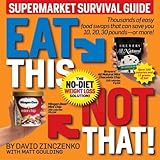 Eat This Not That! Supermarket Survival Guide: The No-Diet Weight Loss Solution by David Zinczenko, Matt Goulding
-
Eat This Not That! Supermarket Survival Guide: The No-Diet Weight Loss Solution by David Zinczenko, Matt Goulding
- Features of the Eat This Not That! Supermarket Survival Guide: - the 20 Worst Foods in the Supermarket - the Ultimate Supermarket Label Decoder - 17 Secrets the Food Industry Doesn't Want You to Know - Shop Once, Eat for a Week - How to Stock the Perfect Pantry Investigative, comprehensive, and compelling, this guide helps consumers navigate their shopping carts through the thousands of nutritional pitfalls in every grocery store to help you lose weight, save cash, and bring home the tastiest, healthiest choices every time. With tens of thousands of products crammed into the walls of the neighborhood supermarket, trying to find a reliable snack, pantry product, or frozen dinner can be a serious challenge for the time-strained consumer. The Eat This, Not That! Supermarket Survival Guide changes all of that, offering discerning shoppers everywhere a simple plan for finding the healthiest foods for them and their families. Beyond homing in on the best and worst in the world of packaged foods, the Eat This, Not That! Supermarket Survival Guide scours the aisles to help you pick the most nutrient-packed produce, the leanest, tastiest cuts of meat, exotic cheeses that double as healthy snacks, and the best contaminant-free fish the ocean has to offer.
Click each image below for a larger view of selections from Eat This Not That! For Supermarkets
List Price: $19.95
Our Price: $7.96
More Info! |
 The Gabriel Method: The Revolutionary DIET-FREE Way to Totally Transform Your Body by Jon Gabriel
- The pile of recent dieting books is growing faster than the average American's waistline. From the well-known programs that deprive and restrict to ones that rely on juice alone, it seems that everybody has an answer to the growing problem of obesity.
The Gabriel Method: The Revolutionary DIET-FREE Way to Totally Transform Your Body by Jon Gabriel
- The pile of recent dieting books is growing faster than the average American's waistline. From the well-known programs that deprive and restrict to ones that rely on juice alone, it seems that everybody has an answer to the growing problem of obesity.When Jon Gabriel's life took an unexpected turn, he suddenly was awakened to the marvelous gift that he had been given -- the opportunity to live -- and was disgusted at how he had treated his body. At over four hundred pounds, walking, sleeping, and working was a struggle against gravity, and his life was a constant battle between emotional and physical satiation. He was slowly killing himself with food. Like the estimated 58 percent of Americans, and rising numbers in other countries, Jon was trapped in what he came to call the FAT - Famine and Temperature - trap. By studying biochemistry, Gabriel learned that your body has an internal logic that determines how fat or thin you will be at any given time. The way to lose weight is not to struggle or to force yourself to lose weight but to understand this internal logic and work with it so that your body wants to be thinner. When your body wants to be thinner, weight loss is inevitable and becomes automatic and effortless. You simply crave less food, you crave healthier foods, your metabolism speeds up and you become very efficient at burning fat, just like a naturally thin person. And that's the real transformation -- to transform yourself into a naturally thin person, so that you can eat whatever you want whenever you want and still be thin, fit, and vibrantly healthy. After reading The Gabriel Method, you will learn: Your body has a reason why it's holding on to weight--and it's not your fault.Fat is a cushion--a protective barrier that our mind believes is helping to protect us. If you can change that belief, you can change your body; Stop the cycle of crash dieting and start eating what you want, when you want it.How to choose healthy, nutritious foods that nourish the cells in your body, not starve them.Delicious shakes and smoothies, and super-power supplements, that can jump start your success.The simple way you can train your mind and body to work with your goal of health, not against it.Eliminate the emotional and mental reasons your body holds on to weight in just 10 minutes a day. It certainly worked for Jon; he lost 225 pounds in two-and-a-half years, going from 409 pounds to 184, without suffering, dieting, or anguishing over his body. Unlike most people who lose an extensive amount of weight, his skin tightened up and now is indistinguishable from that of a person who has been healthy his whole life.
List Price: $15.00
Our Price: $8.53
More Info! |
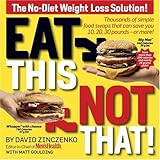 Eat This, Not That! Thousands of Simple Food Swaps that Can Save You 10, 20, 30 Pounds--or More! by David Zinczenko, Matt Goulding
- Eat what you want, when you want--and watch the pounds disappear!
Eat This, Not That! Thousands of Simple Food Swaps that Can Save You 10, 20, 30 Pounds--or More! by David Zinczenko, Matt Goulding
- Eat what you want, when you want--and watch the pounds disappear! Americans spend more than $400 billion a year eating out, and behind each burger, turkey sandwich, and ice cream sundae is a simple decision that could help you control your weight--and your life. The problem is, restaurant chains and food producers aren't interested in helping you make healthy choices. In fact, they invest $30 billion a year on advertising, much of it aimed at confusing eaters and disguising the fat and calorie counts of their products. All of that has changed with EAT THIS, NOT THAT!. This book puts the entire food industry under the spotlight, and arms you with the savvy tricks and insider information it takes to eat well no matter where you are. With EAT THIS, NOT THAT! you're the expert in every eating situation, from the frozen food aisle to your favorite fast food joint to your local sports bar. You control your food universe--and lose the pounds you want--because, unlike every other customer, you'll know the smart choices to make--instantly! EAT THIS, NOT THAT! is jam-packed with secrets the restaurant industry doesn't want you to know. For example: * Burger King doesn't want you to know that a BK Big Fish® Sandwich and fries have a whopping 1000 calories--nearly half your daily caloric intake! (Fish is usually healthy, but not this kind. Find out why with this book.) * Pizza Hut doesn't want you to know that a standard pizza in Italy contains 500 to 800 calories, but the same meal at Pizza Hut can top 2,100 calories! (You'd need to ride a stationary bike for more than three hours to burn off this mistake. Instead, eat all the pizza you want by making smart choices. EAT THIS, NOT THAT! shows you how.) * Macaroni Grill doesn't want you to know that a single serving of their Grilled Teriyaki Salmon has more than three times your daily allowance of sodium! (Cut your risk of high blood pressure by making smart choices at the same restaurant. You'll find them inside.) If only you knew the industry secrets, you could eat at any of your favorite restaurants--or chow down on everything from the company vending machine to your kids' Halloween buckets--and know that every decision you made was smart, healthy, and the best possible choice for you. For example, did you know: * At McDonald's, an Egg McMuffin® is actually a healthy choice, with just 300 calories. (The Hotcakes pack more than double that amount!) * At Krispy Kreme, all you need to do is order the Very Berry Chiller instead of the Mocha Dream Chiller, and you'll save 500 calories! (Do that once a week and you'll drop more than 7 pounds this year--without trying!) * At Chipotle, you can cut 570 calories out of your Chicken Burrito just by ordering it as a bowl (without the tortilla) and asking them to hold the rice. (Same great taste, but with 94 fewer carb grams!) * Choosing a cinnamon roll at Au Bon Pain over Cinnabon will save you 463 calories and 20 grams of fat! * In the freezer section of your local supermarket, a turkey pot pie from Swanson's has 610 fewer calories than a turkey pot pie from Pepperidge Farms. * In the produce aisle, you'll get twice the vitamin C--and nine times as much vitamin A--simply by picking red bell peppers over green ones. (Who said eating healthy was difficult?) And that's why EAT THIS, NOT THAT! is going to change everything. It's time to level the playing field. We're all tired of sneaky calories adding to our waistlines, and having to starve ourselves or spend hours on the treadmill trying to burn off the damage. Now--for the first time--you're in charge. With this simple illustrated guide to thousands of foods--along with the nutrition secrets that lead to fast and permanent weight loss--you'll make the smartest choice every time!
List Price: $19.95
Our Price: $7.96
More Info! |
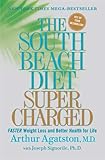 The South Beach Diet Supercharged: Faster Weight Loss and Better Health for Life by Dr. Arthur Agatston, Joseph Signorile PhD
-
The South Beach Diet Supercharged: Faster Weight Loss and Better Health for Life by Dr. Arthur Agatston, Joseph Signorile PhD
- Five years ago, with the publication of The South Beach Diet, renowned Miami cardiologist Dr. Arthur Agatston set out to change the way America eats. Now he has an even more ambitious goal: to change the way America lives by helping Americans become fitter as well as thinner and healthier . . . for life. In the all-new The South Beach Diet Supercharged, Dr. Agatston shows you how to rev up your metabolism and lose weight faster while following the proven healthy eating principles of the original diet: choose good carbs, good fats, lean protein, and low-fat dairy. Collaborating with Dr. Joseph Signorile, a professor of exercise physiology at the University of Miami, Dr. Agatston presents a cutting-edge, three-phase workout that perfectly complements the three phases of the diet itself. Based on the latest exercise science, this ease-into-it fitness program combines low- and high-intensity interval exercise (with a focus on walking) and functional core body-toning exercises. The result: You'll look fitter and you'll burn more fat and calories all day even at rest. Also included is the latest nutritional research on how specific foods high in vitamins, minerals, fiber, and a host of phytonutrients help keep you healthy; new and expanded lists of Foods to Enjoy; taste-tempting Meal Plans for phases 1 and 2; and dozens of easy-to-prepare new recipes, including Eggs Frijoles, Chock-Full-of-Veggies Chili, Roasted Tomato Soup, Homestyle Turkey Meatloaf, and South Beach Diet Tiramisu. In every chapter you'll find inspiring success stories from real-life South Beach dieters and plenty of effective weight loss tips. And as an added bonus, Dr. Agatston answers the questions you've most often asked him about the diet since the original book was published. Five years ago, with the publication of The South Beach Diet, renowned Miami cardiologist Dr. Arthur Agatston set out to change the way America eats. Now he has an even more ambitious goal: to change the way America lives by helping Americans become fitter as well as thinner and healthier…for life. In the all-new The South Beach Diet Supercharged, Dr. Agatston shows you how to rev up your metabolism and lose weight faster while following the proven healthy eating principles of the original diet: choose good carbs, good fats, lean protein, and low-fat dairy. Collaborating with Dr. Joseph Signorile, a professor of exercise physiology at the University of Miami, Dr. Agatston presents a cutting-edge, three-phase workout that perfectly complements the three phases of the diet itself. Based on the latest exercise science, this ease-into-it fitness program combines low- and high-intensity interval exercise (with a focus on walking) and functional core body-toning exercises. The result: you'll look fitter and you'll burn more fat and calories all day--even at rest. Also included is the latest nutritional research on how specific foods high in vitamins, minerals, fiber, and a host of phytonutrients help keep you healthy; new and expanded lists of Foods to Enjoy; taste-tempting Meal Plans for phases 1 and 2; and dozens of easy-to-prepare new recipes, including Eggs Frijoles, Chock-Full-of-Veggies Chili, Roasted Tomato Soup, Homestyle Turkey Meatloaf, and South Beach Diet Tiramisu. In every chapter you'll find inspiring success stories from real-life South Beach dieters and plenty of effective weight loss tips. And as an added bonus, Dr. Agatston answers the questions you've most often asked him about the diet since the original book was published.
Before and After The South Beach Diet Supercharged After 6 weeks, Allison Brady, age 37, lost 12 pounds and 12 1/4 inches--6 inches in her belly alone! Allison also reduced her blood cholesterol levels by 45 points.
(Photos by Jeffrey Salter for Redux)
List Price: $16.95
Our Price: $6.78
More Info!
|
 Born to Run: A Hidden Tribe, Superathletes, and the Greatest Race the World Has Never Seen by Christopher McDougall
- Full of incredible characters, amazing athletic achievements, cutting-edge science, and, most of all, pure inspiration, Born to Run is an epic adventure that began with one simple question: Why does my foot hurt? In search of an answer, Christopher McDougall sets off to find a tribe of the world’s greatest distance runners and learn their secrets, and in the process shows us that everything we thought we knew about running is wrong.
Born to Run: A Hidden Tribe, Superathletes, and the Greatest Race the World Has Never Seen by Christopher McDougall
- Full of incredible characters, amazing athletic achievements, cutting-edge science, and, most of all, pure inspiration, Born to Run is an epic adventure that began with one simple question: Why does my foot hurt? In search of an answer, Christopher McDougall sets off to find a tribe of the world’s greatest distance runners and learn their secrets, and in the process shows us that everything we thought we knew about running is wrong.
Isolated by the most savage terrain in North America, the reclusive Tarahumara Indians of Mexico’s deadly Copper Canyons are custodians of a lost art. For centuries they have practiced techniques that allow them to run hundreds of miles without rest and chase down anything from a deer to an Olympic marathoner while enjoying every mile of it. Their superhuman talent is matched by uncanny health and serenity, leaving the Tarahumara immune to the diseases and strife that plague modern existence. With the help of Caballo Blanco, a mysterious loner who lives among the tribe, the author was able not only to uncover the secrets of the Tarahumara but also to find his own inner ultra-athlete, as he trained for the challenge of a lifetime: a fifty-mile race through the heart of Tarahumara country pitting the tribe against an odd band of Americans, including a star ultramarathoner, a beautiful young surfer, and a barefoot wonder.
With a sharp wit and wild exuberance, McDougall takes us from the high-tech science labs at Harvard to the sun-baked valleys and freezing peaks across North America, where ever-growing numbers of ultrarunners are pushing their bodies to the limit, and, finally, to the climactic race in the Copper Canyons. Born to Run is that rare book that will not only engage your mind but inspire your body when you realize that the secret to happiness is right at your feet, and that you, indeed all of us, were born to run.
From the Hardcover edition.Book Description
Full of incredible characters, amazing athletic achievements, cutting-edge science, and, most of all, pure inspiration, Born to Run is an epic adventure that began with one simple question: Why does my foot hurt? In search of an answer, Christopher McDougall sets off to find a tribe of the world’s greatest distance runners and learn their secrets, and in the process shows us that everything we thought we knew about running is wrong.
Isolated by the most savage terrain in North America, the reclusive Tarahumara Indians of Mexico’s deadly Copper Canyons are custodians of a lost art. For centuries they have practiced techniques that allow them to run hundreds of miles without rest and chase down anything from a deer to an Olympic marathoner while enjoying every mile of it. Their superhuman talent is matched by uncanny health and serenity, leaving the Tarahumara immune to the diseases and strife that plague modern existence. With the help of Caballo Blanco, a mysterious loner who lives among the tribe, the author was able not only to uncover the secrets of the Tarahumara but also to find his own inner ultra-athlete, as he trained for the challenge of a lifetime: a fifty-mile race through the heart of Tarahumara country pitting the tribe against an odd band of Americans, including a star ultramarathoner, a beautiful young surfer, and a barefoot wonder. With a sharp wit and wild exuberance, McDougall takes us from the high-tech science labs at Harvard to the sun-baked valleys and freezing peaks across North America, where ever-growing numbers of ultrarunners are pushing their bodies to the limit, and, finally, to the climactic race in the Copper Canyons. Born to Run is that rare book that will not only engage your mind but inspire your body when you realize that the secret to happiness is right at your feet, and that you, indeed all of us, were born to run.
Amazon Exclusive: A Q&A with Christopher McDougall
List Price: $24.95
Our Price: $14.94
More Info! |
The South Beach Diet Supercharged: Faster Weight Loss and Better Health for Life by Dr. Arthur Agatston, Joseph Signorile PhD
- Five years ago, with the publication of The South Beach Diet, renowned Miami cardiologist Dr. Arthur Agatston set out to change the way America eats. Now he has an even more ambitious goal: to change the way America lives by helping Americans become fitter as well as thinner and healthier . . . for life. In the all-new The South Beach Diet Supercharged, Dr. Agatston shows you how to rev up your metabolism and lose weight faster while following the proven healthy eating principles of the original diet: choose good carbs, good fats, lean protein, and low-fat dairy. Collaborating with Dr. Joseph Signorile, a professor of exercise physiology at the University of Miami, Dr. Agatston presents a cutting-edge, three-phase workout that perfectly complements the three phases of the diet itself. Based on the latest exercise science, this ease-into-it fitness program combines low- and high-intensity interval exercise (with a focus on walking) and functional core body-toning exercises. The result: You'll look fitter and you'll burn more fat and calories all day even at rest. Also included is the latest nutritional research on how specific foods high in vitamins, minerals, fiber, and a host of phytonutrients help keep you healthy; new and expanded lists of Foods to Enjoy; taste-tempting Meal Plans for phases 1 and 2; and dozens of easy-to-prepare new recipes, including Eggs Frijoles, Chock-Full-of-Veggies Chili, Roasted Tomato Soup, Homestyle Turkey Meatloaf, and South Beach Diet Tiramisu. In every chapter you'll find inspiring success stories from real-life South Beach dieters and plenty of effective weight loss tips. And as an added bonus, Dr. Agatston answers the questions you've most often asked him about the diet since the original book was published. Five years ago, with the publication of The South Beach Diet, renowned Miami cardiologist Dr. Arthur Agatston set out to change the way America eats. Now he has an even more ambitious goal: to change the way America lives by helping Americans become fitter as well as thinner and healthier…for life. In the all-new The South Beach Diet Supercharged, Dr. Agatston shows you how to rev up your metabolism and lose weight faster while following the proven healthy eating principles of the original diet: choose good carbs, good fats, lean protein, and low-fat dairy. Collaborating with Dr. Joseph Signorile, a professor of exercise physiology at the University of Miami, Dr. Agatston presents a cutting-edge, three-phase workout that perfectly complements the three phases of the diet itself. Based on the latest exercise science, this ease-into-it fitness program combines low- and high-intensity interval exercise (with a focus on walking) and functional core body-toning exercises. The result: you'll look fitter and you'll burn more fat and calories all day--even at rest. Also included is the latest nutritional research on how specific foods high in vitamins, minerals, fiber, and a host of phytonutrients help keep you healthy; new and expanded lists of Foods to Enjoy; taste-tempting Meal Plans for phases 1 and 2; and dozens of easy-to-prepare new recipes, including Eggs Frijoles, Chock-Full-of-Veggies Chili, Roasted Tomato Soup, Homestyle Turkey Meatloaf, and South Beach Diet Tiramisu. In every chapter you'll find inspiring success stories from real-life South Beach dieters and plenty of effective weight loss tips. And as an added bonus, Dr. Agatston answers the questions you've most often asked him about the diet since the original book was published.
Before and After The South Beach Diet Supercharged After 6 weeks, Allison Brady, age 37, lost 12 pounds and 12 1/4 inches--6 inches in her belly alone! Allison also reduced her blood cholesterol levels by 45 points.
(Photos by Jeffrey Salter for Redux)
List Price: $16.95
Our Price: $6.78
More Info!
|
 Got Fight?: The 50 Zen Principles of Hand-to-Face Combat by Forrest Griffin, Erich Krauss
-
Got Fight?: The 50 Zen Principles of Hand-to-Face Combat by Forrest Griffin, Erich Krauss
- Wondering why you should purchase this book when there are other titles on the shelves written by much higher-caliber fighters? Well, Forrest Griffin is not as good-looking as those guys. He's not as smart as them. He's also not as athletically endowed. And let's face it, neither are you. Those other fighters are pretty much better than you in every way. But you can actually aspire to be as good as Forrest one day. Why? Because he is nothing special, just like you. Forrest is not a martial artist. He's a fighter, and this book was written for his kin. If you're a hillbilly like Forrest and you get off on having your face rearranged, Got Fight? is for you. This is a manifesto more strategic than Sun Tzu's The Art of War, more philosophical than Bruce Lee's Tao of Jeet Kune Do, more powerful than a well-lubricated locomotive. In these pages you will learn about true mental toughness—whether it's scraping it out in the Octagon or picking up chicks. You will learn about the mental defects that made Forrest Griffin into the abomination he is today and how you can use your shortcomings to become equally horrible. You will learn the essential tactics of hand-to-hand combat as well as how to defend yourself in the event of a sword attack. Never been attacked by a sword? You need this book worse that we thought. Still not convinced? Don't worry. Even if you find that the book sucks, it will be no worse than having sex with Forrest Griffin. You'll feel a small prick and some minor discomfort, and then it will all be over.
List Price: $23.99
Our Price: $14.52
More Info! |
 Eat Right 4 Your Type: The Individualized Diet Solution to Staying Healthy, Living Longer & Achieving Your Ideal Weight by Peter J. D'Adamo
- Proposes that a person's blood type can both influence health and explain individuals' reactions to foods, and presents four different plans, based on blood type, for diet, exercise, and good health.If you've ever wondered why the latest fad diet doesn't work for you... well, there are lots of reasons, mostly the fact that it's a fad diet. But it could also be that you're the wrong blood type for the kinds of foods the diet recommends. Peter D'Adamo makes a persuasive argument that your blood type is an evolutionary marker that tells you which foods you'll process best, and which will be useless calories. He covers the entire range for each of the four blood types, from entrées to condiments and seasonings, and also makes type-specific exercise and lifestyle recommendations.
Eat Right 4 Your Type: The Individualized Diet Solution to Staying Healthy, Living Longer & Achieving Your Ideal Weight by Peter J. D'Adamo
- Proposes that a person's blood type can both influence health and explain individuals' reactions to foods, and presents four different plans, based on blood type, for diet, exercise, and good health.If you've ever wondered why the latest fad diet doesn't work for you... well, there are lots of reasons, mostly the fact that it's a fad diet. But it could also be that you're the wrong blood type for the kinds of foods the diet recommends. Peter D'Adamo makes a persuasive argument that your blood type is an evolutionary marker that tells you which foods you'll process best, and which will be useless calories. He covers the entire range for each of the four blood types, from entrées to condiments and seasonings, and also makes type-specific exercise and lifestyle recommendations.
List Price: $24.95
Our Price: $9.00
More Info! |
 Making the Cut: The 30-Day Diet and Fitness Plan for the Strongest, Sexiest You by Jillian Michaels
- You’ve seen her change lives on The Biggest Loser–why not yours?
Making the Cut: The 30-Day Diet and Fitness Plan for the Strongest, Sexiest You by Jillian Michaels
- You’ve seen her change lives on The Biggest Loser–why not yours?
Are you in good shape but struggling with those last ten to twenty pounds? Do you have an event on the calendar where you’d love to make jaws drop? Or do you just want to see what it would be like to have the best body you’ve ever had? Then you need to discover what millions who’ve seen Jillian’s training methods on The Biggest Loser already know!
Making the Cut empowers you to:
• Identify your unique body type and metabolic makeup (are you a fast, slow, or balanced oxidizer?) and customize a diet plan that is perfect for you
• Acquire the mental techniques that will greatly enhance your self-confidence and sharpen your focus on success
• Develop your strength, flexibility, coordination, and endurance
• Reach levels of fitness you never before thought possible
List Price: $14.95
Our Price: $8.69
More Info! |
 The South Beach Diet: The Delicious, Doctor-Designed, Foolproof Plan for Fast and Healthy Weight Loss (Random House Large Print (Cloth/Paper)) by Arthur Agatston
- Great food that's good for you--that's the foundation of the South Beach Diet and the reason millions of people around the world have adopted it as their lifelong eating plan, shedding unwanted pounds in the process. Created by leading Miami cardiologist Arthur Agatston, M.D., the diet emphasizes good fats and good carbohydrates, the kind that stave off cravings for unhealthy sugary food and promote long-term weight loss. It's not "diet" food--it's satisfying, flavorful dishes that are good for your health and your waistline.The verdict is in: those simple carbs we've been living on are killing us. For good health, we've got to get our blood sugar under control and stop the incessant cravings. Or so says Dr. Arthur Agatston, author of The South Beach Diet. The first half of the book details the science behind the diet. Most of the explanations revolve around why things you thought were healthy—-orange juice, wheat toast, carrots—-are actually evil. To avoid blood sugar surges, Agatston created a modified carbohydrate plan, recommending plenty of high-fiber foods, lean proteins, and healthy fats, while cutting bread, rice, pastas, and fruits. Major differences from other diets include a lack of concern over portion size and a serious indifference to exercise. Feeling full while on a diet is a beautiful thing, but it seems odd that a cardiologist buries his exercise recommendations in a solitary sentence.
The South Beach Diet: The Delicious, Doctor-Designed, Foolproof Plan for Fast and Healthy Weight Loss (Random House Large Print (Cloth/Paper)) by Arthur Agatston
- Great food that's good for you--that's the foundation of the South Beach Diet and the reason millions of people around the world have adopted it as their lifelong eating plan, shedding unwanted pounds in the process. Created by leading Miami cardiologist Arthur Agatston, M.D., the diet emphasizes good fats and good carbohydrates, the kind that stave off cravings for unhealthy sugary food and promote long-term weight loss. It's not "diet" food--it's satisfying, flavorful dishes that are good for your health and your waistline.The verdict is in: those simple carbs we've been living on are killing us. For good health, we've got to get our blood sugar under control and stop the incessant cravings. Or so says Dr. Arthur Agatston, author of The South Beach Diet. The first half of the book details the science behind the diet. Most of the explanations revolve around why things you thought were healthy—-orange juice, wheat toast, carrots—-are actually evil. To avoid blood sugar surges, Agatston created a modified carbohydrate plan, recommending plenty of high-fiber foods, lean proteins, and healthy fats, while cutting bread, rice, pastas, and fruits. Major differences from other diets include a lack of concern over portion size and a serious indifference to exercise. Feeling full while on a diet is a beautiful thing, but it seems odd that a cardiologist buries his exercise recommendations in a solitary sentence. The last half of the book covers his three-stage plan; daily diets are mixed with recipes, some of which are from South Beach restaurant chefs. The most restrictive period lasts just two weeks, enough time to stabilize your urges and lose a few pounds; stage two adds fruits and a handful of other carbs, while stage three is meant to last the remainder of your life, with occasional lapses for white bread or birthday cake. While the diet is sound, the book could be better organized. The first half mixes scientific study with anecdote in a seemingly random way, while the mix of meal plans and recipes can be confusing. Still, the recipes are varied and tasty, and you'll never feel deprived, unless you currently happen to live by bread alone. --Jill Lightner
List Price: $26.95
Our Price: $5.00
More Info! |
 Yoga Anatomy by Leslie Kaminoff
- See inside every yoga pose! With clear, expert instruction and full-color, detailed anatomical drawings, Yoga Anatomy depicts the most common asanas to provide a deeper understanding of the structures and principles underlying each movement and of yoga itself.
Yoga Anatomy by Leslie Kaminoff
- See inside every yoga pose! With clear, expert instruction and full-color, detailed anatomical drawings, Yoga Anatomy depicts the most common asanas to provide a deeper understanding of the structures and principles underlying each movement and of yoga itself.
From breathing to standing poses, see how each muscle is used, how slight alterations of a pose can enhance or reduce effectiveness, and how the spine, breathing, and body position are all fundamentally linked.
Whether you are just beginning your journey or have been practicing yoga for years, Yoga Anatomy will be an invaluable resource—one that allows you to see each movement in an entirely new light.
Author Leslie Kaminoff is a recognized expert and teacher in anatomy, breathing, and bodywork. He is the founder of The Breathing Project, New York City’s premiere yoga studio dedicated to the teaching of individualized, breath-centered yoga practice and therapy.
List Price: $19.95
Our Price: $12.54
More Info! |
 ChiRunning: A Revolutionary Approach to Effortless, Injury-Free Running by Danny Dreyer, Katherine Dreyer
- Join the hundreds of thousands of people who are now running without injury or pain using the ChiRunning method. This new edition is fully updated with fresh insights and innovative training techniques from one of the sport's leading voices. Danny Dreyer teaches us how to heal and prevent injuries and also to run faster, farther, and with much less effort at any age or ability.
ChiRunning: A Revolutionary Approach to Effortless, Injury-Free Running by Danny Dreyer, Katherine Dreyer
- Join the hundreds of thousands of people who are now running without injury or pain using the ChiRunning method. This new edition is fully updated with fresh insights and innovative training techniques from one of the sport's leading voices. Danny Dreyer teaches us how to heal and prevent injuries and also to run faster, farther, and with much less effort at any age or ability.With more than 150,000 copies in print, this groundbreaking program makes running safe and fun for beginning and seasoned runners, while also giving competitive runners the edge they seek. ChiRunning employs the deep power reserves in the core muscles, an approach found in disciplines such as yoga, Pilates, and in this case T'ai Chi. Make knee pain and shin splints a thing of the pastExperience the natural efficiency of the midfoot strikeDramatically reduce your potential for injuryTransform your running with our new 10-step training program ChiRunning provides powerful insight and transforms running from a high-injury sport to a body-friendly fitness phenomenon. Join the revolution!
List Price: $15.99
Our Price: $10.00
More Info! |
 Spark: The Revolutionary New Science of Exercise and the Brain by John J. Ratey
- A groundbreaking and fascinating investigation into the transformative effects of exercise on the brain, from the bestselling author and renowned psychiatrist John J. Ratey, MD.
Spark: The Revolutionary New Science of Exercise and the Brain by John J. Ratey
- A groundbreaking and fascinating investigation into the transformative effects of exercise on the brain, from the bestselling author and renowned psychiatrist John J. Ratey, MD.
Did you know you can beat stress, lift your mood, fight memory loss, sharpen your intellect, and function better than ever simply by elevating your heart rate and breaking a sweat? The evidence is incontrovertible: Aerobic exercise physically remodels our brains for peak performance.
In SPARK, John J. Ratey, M.D., embarks upon a fascinating and entertaining journey through the mind-body connection, presenting startling research to prove that exercise is truly our best defense against everything from depression to ADD to addiction to aggression to menopause to Alzheimer's. Filled with amazing case studies (such as the revolutionary fitness program in Naperville, Illinois, which has put this school district of 19,000 kids first in the world of science test scores), SPARK is the first book to explore comprehensively the connection between exercise and the brain. It will change forever the way you think about your morning run---or, for that matter, simply the way you think
List Price: $24.99
Our Price: $13.58
More Info! |
|
 The End of Overeating: Taking Control of the Insatiable American Appetite by David A. Kessler MD
- Most of us know what it feels like to fall under the spell of food -- when one slice of pizza turns into half a pie, or a handful of chips leads to an empty bag. But it's harder to understand why we can't seem to stop eating -- even when we know better. When we want so badly to say "no," why do we continue to reach for food?
The End of Overeating: Taking Control of the Insatiable American Appetite by David A. Kessler MD
- Most of us know what it feels like to fall under the spell of food -- when one slice of pizza turns into half a pie, or a handful of chips leads to an empty bag. But it's harder to understand why we can't seem to stop eating -- even when we know better. When we want so badly to say "no," why do we continue to reach for food?Dr. David Kessler, the dynamic former FDA commissioner who reinvented the food label and tackled the tobacco industry, cracks the code of overeating by explaining how our bodies and minds are changed when we consume foods that contain sugar, fat, and salt. Food manufacturers create products by manipulating these ingredients to stimulate our appetites, setting in motion a cycle of desire and consumption that ends with a nation of overeaters. The End of Overeating explains for the first time why it is exceptionally difficult to resist certain foods and why it's so easy to overindulge. Dr. Kessler presents groundbreaking research, along with what is sure to be a controversial view inside the industry that continues to feed a our nation -- from popular brand manufacturers to advertisers, chain restaurants, and fast food franchises. Dr. Kessler's cutting-edge investigation offers new insights and useful tools to help us find a solution. There has never been a more thorough, compelling, or in-depth analysis of why we eat the way we do.
List Price: $29.99
Our Price: $17.16
More Info! |
Master Your Metabolism: The 3 Diet Secrets to Naturally Balancing Your Hormones for a Hot and Healthy Body! by Jillian Michaels, Mariska van Aalst
- Does it feel as if you’re fighting your body to lose even one pound—or just to maintain your current weight? Respected health and wellness expert and bestselling author Jillian Michaels has been there, too. So she consulted top experts in the field of metabolism and discovered that she’d inadvertently been abusing her endocrine system for years. After “fixing” her own metabolism, she decided to share what she learned by devising this simple, 3-phase plan that engages all the weight-loss hormones (including the friendly HGH, testosterone, DHEA; and the not-so-friendly: insulin, cortisol, and excess estrogen).
In Master Your Metabolism, discover how to:
•REMOVE “anti-nutrients” from your diet
•RESTORE foods that speak directly to fat-burning genes
•REBALANCE energy and your hormones for effortless weight loss
Michaels offers a wealth of information throughout, including: shopping lists and online shopping resources, hormone-trigger food charts, how to eat “power nutrient” foods on a budget, smart strategies for eating out, quick and easy recipes, as well as mini-programs for addressing PMS, andropause, metabolic syndrome, PCOS, and menopause.
List Price: $26.00
Our Price: $14.45
More Info! |
|
The China Study: The Most Comprehensive Study of Nutrition Ever Conducted and the Startling Implications for Diet, Weight Loss and Long-term Health by T. Colin Campbell, Thomas M. Campbell II
- Referred to as the "Grand Prix of epidemiology" by The New York Times, this study examines more than 350 variables of health and nutrition with surveys from 6,500 adults in more than 2,500 counties across China and Taiwan, and conclusively demonstrates the link between nutrition and heart disease, diabetes, and cancer. While revealing that proper nutrition can have a dramatic effect on reducing and reversing these ailments as well as curbing obesity, this text calls into question the practices of many of the current dietary programs, such as the Atkins diet, that are widely popular in the West. The politics of nutrition and the impact of special interest groups in the creation and dissemination of public information are also discussed.
List Price: $16.95
Our Price: $10.08
More Info! |
 The Last Lecture (Thorndike Press Large Print Nonfiction Series) by Randy Pausch, Jeffrey Zaslow
- "We cannot change the cards we are dealt, just how we play the hand."
The Last Lecture (Thorndike Press Large Print Nonfiction Series) by Randy Pausch, Jeffrey Zaslow
- "We cannot change the cards we are dealt, just how we play the hand."
--Randy Pausch A lot of professors give talks titled "The Last Lecture." Professors are asked to consider their demise and to ruminate on what matters most to them. And while they speak, audiences can't help but mull the same question: What wisdom would we impart to the world if we knew it was our last chance? If we had to vanish tomorrow, what would we want as our legacy? When Randy Pausch, a computer science professor at Carnegie Mellon, was asked to give such a lecture, he didn't have to imagine it as his last, since he had recently been diagnosed with terminal cancer. But the lecture he gave--"Really Achieving Your Childhood Dreams"--wasn't about dying. It was about the importance of overcoming obstacles, of enabling the dreams of others, of seizing every moment (because "time is all you have...and you may find one day that you have less than you think"). It was a summation of everything Randy had come to believe. It was about living. In this book, Randy Pausch has combined the humor, inspiration and intelligence that made his lecture such a phenomenon and given it an indelible form. It is a book that will be shared for generations to come."We cannot change the cards we are dealt, just how we play the hand."
--Randy Pausch A lot of professors give talks titled "The Last Lecture." Professors are asked to consider their demise and to ruminate on what matters most to them. And while they speak, audiences can't help but mull the same question: What wisdom would we impart to the world if we knew it was our last chance? If we had to vanish tomorrow, what would we want as our legacy? When Randy Pausch, a computer science professor at Carnegie Mellon, was asked to give such a lecture, he didn't have to imagine it as his last, since he had recently been diagnosed with terminal cancer. But the lecture he gave--"Really Achieving Your Childhood Dreams"--wasn't about dying. It was about the importance of overcoming obstacles, of enabling the dreams of others, of seizing every moment (because "time is all you have...and you may find one day that you have less than you think"). It was a summation of everything Randy had come to believe. It was about living. In this book, Randy Pausch has combined the humor, inspiration and intelligence that made his lecture such a phenomenon and given it an indelible form. It is a book that will be shared for generations to come. Questions for Randy Pausch
List Price: $32.95
Our Price: $18.95
More Info! |
 Getting Things Done: The Art of Stress-Free Productivity by David Allen
- In today's world, yesterday's methods just don't work. Veteran coach and management consultant David Allen recognizes that time management is useless the minute your schedule is interrupted; setting priorities isn't relevant when your e-mail is down; procrastination solutions won't help if your goals aren't clear. Instead, Allen shares with readers the proven methods he has already introduced in seminars and at top organizations across the country. The key to Getting Things Done? Relaxation.
Getting Things Done: The Art of Stress-Free Productivity by David Allen
- In today's world, yesterday's methods just don't work. Veteran coach and management consultant David Allen recognizes that time management is useless the minute your schedule is interrupted; setting priorities isn't relevant when your e-mail is down; procrastination solutions won't help if your goals aren't clear. Instead, Allen shares with readers the proven methods he has already introduced in seminars and at top organizations across the country. The key to Getting Things Done? Relaxation.
Allen's premise is simple: our ability to be productive is directly proportional to our ability to relax. Only when our minds are clear and our thoughts are organized can we achieve stress-free productivity. His seamless system teaches us how to identify, track, and-most important-choose the next action on all our tasks, commitments, and projects and thus master all the demands on our time while unleashing our creative potential. The book's stylish, dynamic design makes it easy to follow Allen's tips, examples, and inspiration to achieve what we all seek-energy, focus, and relaxed control. With first-chapter allusions to martial arts, "flow," "mind like water," and other concepts borrowed from the East (and usually mangled), you'd almost think this self-helper from David Allen should have been called Zen and the Art of Schedule Maintenance. Not quite. Yes, Getting Things Done offers a complete system for downloading all those free-floating gotta-do's clogging your brain into a sophisticated framework of files and action lists--all purportedly to free your mind to focus on whatever you're working on. However, it still operates from the decidedly Western notion that if we could just get really, really organized, we could turn ourselves into 24/7 productivity machines. (To wit, Allen, whom the New Economy bible Fast Company has dubbed "the personal productivity guru," suggests that instead of meditating on crouching tigers and hidden dragons while you wait for a plane, you should unsheathe that high-tech saber known as the cell phone and attack that list of calls you need to return.) As whole-life-organizing systems go, Allen's is pretty good, even fun and therapeutic. It starts with the exhortation to take every unaccounted-for scrap of paper in your workstation that you can't junk, The next step is to write down every unaccounted-for gotta-do cramming your head onto its own scrap of paper. Finally, throw the whole stew into a giant "in-basket" That's where the processing and prioritizing begin; in Allen's system, it get a little convoluted at times, rife as it is with fancy terms, subterms, and sub-subterms for even the simplest concepts. Thank goodness the spine of his system is captured on a straightforward, one-page flowchart that you can pin over your desk and repeatedly consult without having to refer back to the book. That alone is worth the purchase price. Also of value is Allen's ingenious Two-Minute Rule: if there's anything you absolutely must do that you can do right now in two minutes or less, then do it now, thus freeing up your time and mind tenfold over the long term. It's commonsense advice so obvious that most of us completely overlook it, much to our detriment; Allen excels at dispensing such wisdom in this useful, if somewhat belabored, self-improver aimed at everyone from CEOs to soccer moms (who we all know are more organized than most CEOs to start with). --Timothy Murphy
List Price: $24.95
Our Price: $12.99
More Info! |
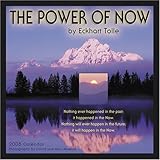 The Power of Now 2008 Calendar by Eckhart Tolle
- In the best-selling book "The Power of Now," Eckhart Tolle explains in remarkably clear terms how living in the Now is the truest path to happiness and enlightenment. Tolle is a widely respected teacher whose views go beyond any particular religion, doctrine or guru, showing us how we can access our deepest self by living fully, and intensely, in the now. Amber Lotus Publishing is proud to partner with New World Library to produce The Power of Now 2008 wall calendar. Each month pairs wisdom quotes by Mr. Tolle with the spectacular photography of David and Marc Muench. The images have been carefully selected to support the teachings of "The Power of Now," helping readers to connect to this essential wisdom and to stay focused in the present moment all year long. Sample Caption: "With the timeless dimension of the Now comes a different kind of knowing... a knowing that does not destroy the sacredness and mystery of life but contains a deep love and reverence for all that is."Ekhart Tolle's message is simple: living in the now is the truest path to happiness and enlightenment. And while this message may not seem stunningly original or fresh, Tolle's clear writing, supportive voice, and enthusiasm make this an excellent manual for anyone who's ever wondered what exactly "living in the now" means. Foremost, Tolle is a world-class teacher, able to explain complicated concepts in concrete language. More importantly, within a chapter of reading this book, readers are already holding the world in a different container--more conscious of how thoughts and emotions get in the way of their ability to live in genuine peace and happiness.
The Power of Now 2008 Calendar by Eckhart Tolle
- In the best-selling book "The Power of Now," Eckhart Tolle explains in remarkably clear terms how living in the Now is the truest path to happiness and enlightenment. Tolle is a widely respected teacher whose views go beyond any particular religion, doctrine or guru, showing us how we can access our deepest self by living fully, and intensely, in the now. Amber Lotus Publishing is proud to partner with New World Library to produce The Power of Now 2008 wall calendar. Each month pairs wisdom quotes by Mr. Tolle with the spectacular photography of David and Marc Muench. The images have been carefully selected to support the teachings of "The Power of Now," helping readers to connect to this essential wisdom and to stay focused in the present moment all year long. Sample Caption: "With the timeless dimension of the Now comes a different kind of knowing... a knowing that does not destroy the sacredness and mystery of life but contains a deep love and reverence for all that is."Ekhart Tolle's message is simple: living in the now is the truest path to happiness and enlightenment. And while this message may not seem stunningly original or fresh, Tolle's clear writing, supportive voice, and enthusiasm make this an excellent manual for anyone who's ever wondered what exactly "living in the now" means. Foremost, Tolle is a world-class teacher, able to explain complicated concepts in concrete language. More importantly, within a chapter of reading this book, readers are already holding the world in a different container--more conscious of how thoughts and emotions get in the way of their ability to live in genuine peace and happiness. Tolle packs a lot of information and inspirational ideas into The Power of Now. (Topics include the source of Chi, enlightened relationships, creative use of the mind, impermanence, and the cycle of life.) Thankfully, he's added markers that symbolize "break time." This is when readers should close the book and mull over what they just read. As a result, The Power of Now reads like the highly acclaimed A Course in Miracles--a spiritual guidebook that has the potential to inspire just as many study groups and change just as many lives for the better. --Gail Hudson
List Price: $13.99
Our Price: $24.77
More Info! |
 Clean by Alejandro Junger
-
Clean by Alejandro Junger
- Clean is an M.D.'s program that provides all the tools necessary to support and reactivate our detoxification system to its fullest capabilities, and can be easily incorporated into a busy schedule. The effect is transformative: nagging health problems will suddenly disappear, extra weight will drop away, and for the first time in our lives we will experience what it truly means to feel healthy. Every day spent on the Clean program is a major step in healing not just the symptom but the root of the problem, effectively and simply. Dr. Junger's life-changing program restores what rightfully belongs to you—your health, vitality, and peace of mind.
List Price: $25.99
Our Price: $14.29
More Info! |
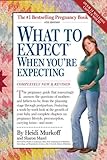 What to Expect When You're Expecting: Fourth Edition by Heidi Murkoff, Sharon Mazel
- Announcing a brand new, cover-to-cover revision of America's pregnancy bible. What to Expect When You're Expecting is a perennial New York Times bestseller and one of USA Today's 25 most influential books of the past 25 years. It's read by more than 90% of pregnant women who read a pregnancy book—the most iconic, must-have book for parents-to-be, with over 14.5 million copies in print.
What to Expect When You're Expecting: Fourth Edition by Heidi Murkoff, Sharon Mazel
- Announcing a brand new, cover-to-cover revision of America's pregnancy bible. What to Expect When You're Expecting is a perennial New York Times bestseller and one of USA Today's 25 most influential books of the past 25 years. It's read by more than 90% of pregnant women who read a pregnancy book—the most iconic, must-have book for parents-to-be, with over 14.5 million copies in print.
Now comes the Fourth Edition, a new book for a new generation of expectant moms—featuring a new look, a fresh perspective, and a friendlier-than-ever voice. It's filled with the most up-to-date information reflecting not only what's new in pregnancy, but what's relevant to pregnant women. Heidi Murkoff has rewritten every section of the book, answering dozens of new questions and including loads of new asked-for material, such as a detailed week-by-week fetal development section in each of the monthly chapters, an expanded chapter on pre-conception, and a brand new one on carrying multiples. More comprehensive, reassuring, and empathetic than ever, the Fourth Edition incorporates the most recent developments in obstetrics and addresses the most current lifestyle trends (from tattooing and belly piercing to Botox and aromatherapy). There's more than ever on pregnancy matters practical (including an expanded section on workplace concerns), physical (with more symptoms, more solutions), emotional (more advice on riding the mood roller coaster), nutritional (from low-carb to vegan, from junk food–dependent to caffeine-addicted), and sexual (what's hot and what's not in pregnant lovemaking), as well as much more support for that very important partner in parenting, the dad-to-be.
Overflowing with tips, helpful hints, and humor (a pregnant woman's best friend), this new edition is more accessible and easier to use than ever before. It's everything parents-to-be have come to expect from What to Expect...only better?.Announcing a brand new, cover-to-cover revision of America's pregnancy bible. What to Expect When You're Expecting is a perennial New York Times bestseller and one of USA Today's 25 most influential books of the past 25 years. It's read by more than 90% of pregnant women who read a pregnancy book--the most iconic, must-have book for parents-to-be, with over 14.5 million copies in print. Now comes the Fourth Edition, a new book for a new generation of expectant moms--featuring a new look, a fresh perspective, and a friendlier-than-ever voice. It's filled with the most up-to-date information reflecting not only what's new in pregnancy, but what's relevant to pregnant women. Heidi Murkoff has rewritten every section of the book, answering dozens of new questions and including loads of new asked-for material, such as a detailed week-by-week fetal development section in each of the monthly chapters, an expanded chapter on pre-conception, and a brand new one on carrying multiples. More comprehensive, reassuring, and empathetic than ever, the Fourth Edition incorporates the most recent developments in obstetrics and addresses the most current lifestyle trends (from tattooing and belly piercing to Botox and aromatherapy). There's more than ever on pregnancy matters practical (including an expanded section on workplace concerns), physical (with more symptoms, more solutions), emotional (more advice on riding the mood roller coaster), nutritional (from low-carb to vegan, from junk food–dependent to caffeine-addicted), and sexual (what's hot and what's not in pregnant lovemaking), as well as much more support for that very important partner in parenting, the dad-to-be. Overflowing with tips, helpful hints, and humor (a pregnant woman's best friend), this new edition is more accessible and easier to use than ever before. It's everything parents-to-be have come to expect from What to Expect... only better.
Amazon.com Exclusive
An Essay from Heidi Murkoff
List Price: $24.95
Our Price: $13.97
More Info! |
 The 4-Hour Work Week: Escape 9-5, Live Anywhere, and Join the New Rich by Timothy Ferriss
- Tim Ferriss is an extraordinary young man on a mission. The twenty-eight-year-old serial vagabond and successful entrepreneur has been teaching a wildly popular course at Princeton University for the past four years: a how-to and why-to guide to throwing out the old methods for success (balancing life and work, retiring well, having a great nest egg) and replacing them with an entirely new way of living.
The 4-Hour Work Week: Escape 9-5, Live Anywhere, and Join the New Rich by Timothy Ferriss
- Tim Ferriss is an extraordinary young man on a mission. The twenty-eight-year-old serial vagabond and successful entrepreneur has been teaching a wildly popular course at Princeton University for the past four years: a how-to and why-to guide to throwing out the old methods for success (balancing life and work, retiring well, having a great nest egg) and replacing them with an entirely new way of living. The Four-Hour Work Week explains what a lifestyle entrepreneur is and why you should want to become one. It teaches you how to kill your job and design a life, the 80/20 rule and how it increases productivity, how to replace your dreams with goals, and more. Listeners can lead a rich life by working only four hours a week, freeing up the rest of their time to spend it living the lives they want.
List Price: $55.00
Our Price: $26.95
More Info! |
 How to Win Friends & Influence People (8PK) by Dale Carnegie
- This unabridged collector's edition offers seven and one-half hours of instruction. 8 cassettes.This grandfather of all people-skills books was first published in 1937. It was an overnight hit, eventually selling 15 million copies. How to Win Friends and Influence People is just as useful today as it was when it was first published, because Dale Carnegie had an understanding of human nature that will never be outdated. Financial success, Carnegie believed, is due 15 percent to professional knowledge and 85 percent to "the ability to express ideas, to assume leadership, and to arouse enthusiasm among people." He teaches these skills through underlying principles of dealing with people so that they feel important and appreciated. He also emphasizes fundamental techniques for handling people without making them feel manipulated. Carnegie says you can make someone want to do what you want them to by seeing the situation from the other person's point of view and "arousing in the other person an eager want." You learn how to make people like you, win people over to your way of thinking, and change people without causing offense or arousing resentment. For instance, "let the other person feel that the idea is his or hers," and "talk about your own mistakes before criticizing the other person." Carnegie illustrates his points with anecdotes of historical figures, leaders of the business world, and everyday folks. --Joan Price
How to Win Friends & Influence People (8PK) by Dale Carnegie
- This unabridged collector's edition offers seven and one-half hours of instruction. 8 cassettes.This grandfather of all people-skills books was first published in 1937. It was an overnight hit, eventually selling 15 million copies. How to Win Friends and Influence People is just as useful today as it was when it was first published, because Dale Carnegie had an understanding of human nature that will never be outdated. Financial success, Carnegie believed, is due 15 percent to professional knowledge and 85 percent to "the ability to express ideas, to assume leadership, and to arouse enthusiasm among people." He teaches these skills through underlying principles of dealing with people so that they feel important and appreciated. He also emphasizes fundamental techniques for handling people without making them feel manipulated. Carnegie says you can make someone want to do what you want them to by seeing the situation from the other person's point of view and "arousing in the other person an eager want." You learn how to make people like you, win people over to your way of thinking, and change people without causing offense or arousing resentment. For instance, "let the other person feel that the idea is his or hers," and "talk about your own mistakes before criticizing the other person." Carnegie illustrates his points with anecdotes of historical figures, leaders of the business world, and everyday folks. --Joan Price
List Price: $99.95
Our Price: $28.95
More Info! |
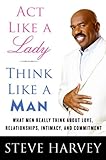 Act Like a Lady, Think Like a Man: What Men Really Think About Love, Relationships, Intimacy, and Commitment by Steve Harvey
-
Act Like a Lady, Think Like a Man: What Men Really Think About Love, Relationships, Intimacy, and Commitment by Steve Harvey
- Steve Harvey, the host of the nationally syndicated Steve Harvey Morning Show, can't count the number of impressive women he's met over the years, whether it's through the "Strawberry Letters" segment of his program or while on tour for his comedy shows. These are women who can run a small business, keep a household with three kids in tiptop shape, and chair a church group all at the same time. Yet when it comes to relationships, they can't figure out what makes men tick. Why? According to Steve it's because they're asking other women for advice when no one but another man can tell them how to find and keep a man. In Act Like a Lady, Think Like a Man, Steve lets women inside the mindset of a man and sheds lights on concepts and questions such as: —The Ninety Day Rule: Ford requires it of its employees. Should you require it of your man? —How to spot a mama's boy and what if anything you can do about it. —When to introduce the kids. And what to read into the first interaction between your date and your kids. —The five questions every woman should ask a man to determine how serious he is. — And more... Sometimes funny, sometimes direct, but always truthful, Act Like a Lady, Think Like a Man is a book you must read if you want to understand how men think when it comes to relationships.
List Price: $23.99
Our Price: $10.94
More Info! |
 The Five Love Languages Gift Edition: How to Express Heartfelt Commitment to Your Mate by Gary Chapman
- In The Five Love Languages, Dr. Gary Chapman talks about how different people express love in different ways. Some people are verbal, expressing their love in words. Others may never speak their affection, yet they show it by the things they do.
The Five Love Languages Gift Edition: How to Express Heartfelt Commitment to Your Mate by Gary Chapman
- In The Five Love Languages, Dr. Gary Chapman talks about how different people express love in different ways. Some people are verbal, expressing their love in words. Others may never speak their affection, yet they show it by the things they do. Sadly, many couples look to receive love the same way they give it, misunderstanding their spouses. This can lead to quarrels, hurt feelings, and even divorce. However, if you understand each other's love languages, you can learn to give and receive love more effectively.~ Unhappiness in marriage often has a simple root cause: we speak different love languages, believes Dr. Gary Chapman. While working as a marriage counselor for more than 30 years, he identified five love languages: Words of Affirmation, Quality Time, Receiving Gifts, Acts of Service, and Physical Touch. In a friendly, often humorous style, he unpacks each one. Some husbands or wives may crave focused attention; another needs regular praise. Gifts are highly important to one spouse, while another sees fixing a leaky faucet, ironing a shirt, or cooking a meal as filling their "love tank." Some partners might find physical touch makes them feel valued: holding hands, giving back rubs, and sexual contact. Chapman illustrates each love language with real-life examples from his counseling practice. How do you discover your spouse’s – and your own – love language? Chapman’s short questionnaires are one of several ways to find out. Throughout the book, he also includes application questions that can be answered more extensively in the beautifully detailed companion leather journal (an exclusive Amazon.com set). Each section of the journal corresponds with a chapter from the book, offering opportunities for deeper reflection on your marriage. Although some readers may find choosing to love a spouse that they no longer even like –hoping the feelings of affection will follow later– a difficult concept to swallow, Chapman promises that the results will be worth the effort. "Love is a choice," says Chapman. "And either partner can start the process today." --Cindy Crosby. This text refers to the Amazon.com Exclusive Journal & Paperback Book Set.
List Price: $21.99
Our Price: $11.00
More Info! |
 7 Habits Of Highly Effective People by Stephen R. Covey
- In The 7 Habits of Highly Effective People, author Stephen R. Covey presents a holistic, integrated, principle-centered approach for solving personal and professional problems. With penetrating insights and pointed anecdotes, Covey reveals a step-by-step pathway for living with fairness, integrity, honesty, and human dignity -- principles that give us the security to adapt to change and the wisdom and power to take advantage of the opportunities that change creates.
7 Habits Of Highly Effective People by Stephen R. Covey
- In The 7 Habits of Highly Effective People, author Stephen R. Covey presents a holistic, integrated, principle-centered approach for solving personal and professional problems. With penetrating insights and pointed anecdotes, Covey reveals a step-by-step pathway for living with fairness, integrity, honesty, and human dignity -- principles that give us the security to adapt to change and the wisdom and power to take advantage of the opportunities that change creates.Anyone who thinks the audiocassette adaptation of Stephen Covey's bestseller, The 7 Habits of Highly Effective People, is a shortcut to reading the book has another thing coming. As a preview, the cassette is worth every one of its 90 minutes; as a substitute for the original, it will only leave you wishing for the rest. There's a reason 7 Habits has sold more than 5 million copies and been translated into 32 languages. Serious work has obviously gone into it, and serious change can likely come out of it--but only with constant discipline and steadfast commitment. As the densely packed tape makes immediately clear, this is no quick fix for what's ailing us in our personal and professional lives. The tape opens to the silky-smooth, overtrained voice of the female narrator, who's responsible for tying together audio clips from actual Covey seminars. Leaving aside the occasional attempts at promoting Covey and his institute, her script does a first-rate job of making sense of Covey's own intense, analogy-rich style of explaining his habits. There's nothing simple about his approach to becoming an effective person. The first three habits alone--which have to do with personal responsibility, leadership, and self-management--could take years to master. Yet the last four are unattainable, the narrator insists, if you can't acquire the personal security--the "inner core," says Covey--that presumably comes from a mastery of the foundation. Throughout our lessons, Covey's presence is both learned and thoroughly appealing. He drops references to the likes of Socrates, T.S. Eliot, and Robert Frost with the aplomb of an English professor. And his knack for mixing everyday stories with abstract concepts manages to clarify difficult issues while respecting our intelligence. You could argue that the cassette is nothing more than a clever marketing tool for selling another few million copies of the book. But, even at that, it's worth the investment in time and concentration: in the end, we're moved to learn more about integrating all seven habits in our struggle to become better and, yes, more effective people. (Running time: 1.5 hours, one cassette) --Ann Senechal
List Price: $14.00
Our Price: $6.95
More Info! |
 The Happiest Baby on the Block: The New Way to Calm Crying and Help Your Baby Sleep Longer by Harvey Karp
- In perhaps the most important parenting book of the decade, Dr. Harvey Karp reveals an extraordinary treasure sought by parents for centuries -- an automatic "off-switch" for their baby's crying.
The Happiest Baby on the Block: The New Way to Calm Crying and Help Your Baby Sleep Longer by Harvey Karp
- In perhaps the most important parenting book of the decade, Dr. Harvey Karp reveals an extraordinary treasure sought by parents for centuries -- an automatic "off-switch" for their baby's crying. No wonder pediatricians across the country are praising him and thousands of Los Angeles parents, from working moms to superstars like Madonna and Pierce Brosnan, have turned to him to learn the secrets for making babies happy. Never again will parents have to stand by helpless and frazzled while their poor baby cries and cries. Dr. Karp has found there IS a remedy for colic. "I share with parents techniques known only to the most gifted baby soothers throughout history...and I explain exactly how they work." In a innovative and thought-provoking reevaluation of early infancy, Dr. Karp blends modern science and ancient wisdom to prove that newborns are not fully ready for the world when they are born. Through his research and experience, he has developed four basic principles that are crucial for understanding babies as well as improving their sleep and soothing their senses: * The Missing Fourth Trimester: as odd as it may sound, one of the main reasons babies cry is because they are born three months too soon. * The Calming Reflex: the automatic reset switch to stop crying of any baby in the first few months of life. * The 5 "S's": the simple steps (swaddling, side/stomach position, shushing, swinging and sucking) that trigger the calming reflex. For centuries, parents have tried these methods only to fail because, as with a knee reflex, the calming reflex only works when it is triggered in precisely the right way. Unlike other books that merely list these techniques Dr. Karp teaches parents exactly how to do them, to guide cranky infants to calm and easy babies to serenity in minutes...and help them sleep longer too. * The Cuddle Cure: the perfect mix the 5 "S's" that can soothe even the most colicky of infants. In the book, Dr. Karp also explains:
What is colic?
Why do most babies get much more upset in the evening?
How can a parent calm a baby -- in mere minutes?
Can babies be spoiled?
When should a parent of a crying baby call the doctor?
How can a parent get their baby to sleep a few hours longer? Even the most loving moms and dads sometimes feel pushed to the breaking point by their infant's persistent cries. Coming to the rescue, however, Dr. Karp places in the hands of parents, grandparents, and all childcare givers the tools they need to be able to calm their babies almost as easily as...turning off a light.
List Price: $23.00
Our Price: $4.95
More Info! |
 Crucial Conversations: Tools for Talking When Stakes are High by Kerry Patterson, Joseph Grenny, Ron McMillan, Al Switzler, Stephen R. Covey
- Foreword by Stephen R. Covey, Author of The 7 Habits of Highly Effective People
Crucial Conversations: Tools for Talking When Stakes are High by Kerry Patterson, Joseph Grenny, Ron McMillan, Al Switzler, Stephen R. Covey
- Foreword by Stephen R. Covey, Author of The 7 Habits of Highly Effective People A PAPERBACK ORIGINAL "Most books make promises. This one delivers. These skills have not only helped us to change the culture of our company, but have also generated new techniques for working together in ways that enabled us to win the largest contract in our industry's history."--Dain M. Hancock, President, Lockheed Martin Aeronautics A powerful, seven-step approach to handling difficult conversations with confidence and skill "Crucial" conversations are interpersonal exchanges at work or at home that we dread having but know we cannot avoid. How do you say what needs to be said while avoiding an argument with a boss, child, or relationship partner? Crucial Conversations offers readers a proven seven-point strategy for achieving their goals in all those emotionally, psychologically, or legally charged situations that can arise in their professional and personal lives. Based on the authors' highly popular DialogueSmart training seminars, the techniques are geared toward getting people to lower their defenses, creating mutual respect and understanding, increasing emotional safety, and encouraging freedom of expression. Among other things, readers also learn about the four main factors that characterize crucial conversations, and they get a powerful six-minute mastery technique that prepares them to work through any highimpact situation with confidence.
List Price: $16.95
Our Price: $7.99
More Info! |
 Love & Respect: The Love She Most Desires; The Respect He Desperately Needs by Emerson Eggerichs
- A Marriage Book with a Difference!
Love & Respect: The Love She Most Desires; The Respect He Desperately Needs by Emerson Eggerichs
- A Marriage Book with a Difference! A Revolutionary Message "I've been married 35 years and have not heard this taught." "This is the key that I have been missing." "A lightbulb moment." "You connected all the dots for me." "As a counselor, I have never been so excited about any material." "You're on to something huge here." A Simple Message A wife has one driving need -- to feel loved. When that need is met, she is happy. A husband has one driving need -- to feel respected. When that need is met, he is happy. When either of these needs isn't met, things get crazy. "Love and Respect" reveals why spouses react negatively to each other, and how they can deal with such conflict quickly, easily and biblically. A Message That Works Based on over three decades of counseling, as well as scientific and biblical research, Dr. Emerson Eggerichs and his wife, Sarah, have already taken the "Love and Respect" message across America and are changing the way couples talk to, think about, and treat each other. What do you want for your marriage? Want some peace? Want to feel close? Want to feel valued? Want to experience marriage the way God intended? Then why not try some "Love and Respect."
List Price: $22.99
Our Price: $11.50
More Info! |
|
|

 amazon.com
 amazon.uk
 amazon.ca
 amazon.fr
 amazon.de
 amazon.jp
 Skinny Bitch: A No-Nonsense, Tough-Love Guide for Savvy Girls Who Want to Stop Eating Crap and Start Looking Fabulous! by Rory Freedman, Kim Barnouin
 BLINK: THE POWER OF THINKING WITHOUT THINKING by MALCOLM GLADWELL
 The Five Love Languages: How to Express Heartfelt Commitment to Your Mate (Men's Edition) by Gary Chapman
 Codependent No More: How to Stop Controlling Others and Start Caring for Yourself by Melody Beattie
 The Seven Principles for Making Marriage Work by John M. Gottman, Nan Silver, John Gottmann